Choosing the right trade show booth truss system requires more than selecting a frame that matches the booth dimensions. The structure must accommodate the exhibition layout, lighting equipment, display screens, signage, and other suspended elements while meeting venue requirements for installation and structural safety. The most suitable system depends on the required span, total loads, connection method, available floor space, and whether the booth will be reused. A well-planned aluminum truss structure balances visual design, installation efficiency, transportation requirements, and long-term operating costs.
For exhibition contractors, event organizers, and purchasing managers, the key is to select a truss configuration that matches the actual application rather than choosing the largest or strongest-looking option. Understanding the differences between spigot trusses, bolt trusses, and custom-shaped structures makes it easier to develop a practical booth design.
Start with the Booth Layout and Structural Requirements
The booth layout determines the basic configuration of the truss system. Before comparing individual products, identify the available exhibition space, booth height restrictions, required openings, and positions of major display elements. These details establish the structural dimensions and help prevent unnecessary modifications during installation.
Different exhibition layouts create different structural requirements:
- Inline booths: A relatively simple framework may be sufficient for overhead branding, lighting, and product displays. The design should respect the neighboring booth boundaries and aisle-facing visibility.
- Corner booths: Two open sides create more opportunities for visitor access and product presentation. The truss arrangement should avoid obstructing entrances and important sightlines.
- Peninsula booths: These layouts usually require greater attention to open circulation areas, overhead framing, and the positioning of support structures.
- Island booths: With access from multiple directions, island booths often benefit from more flexible overhead frameworks, including square, rectangular, or custom-shaped truss arrangements.
Another important consideration is the difference between a decorative frame and a load-supporting structure. A frame intended only for branding or lightweight decorative elements may have different requirements from one carrying LED displays, lighting fixtures, or overhead signs. These functions should be identified before the structural configuration is finalized.
GF-Truss provides aluminum truss systems in different structural configurations, including spigot trusses, bolt trusses, and custom-shaped trusses. Selecting the appropriate category should begin with the booth's actual layout and intended use.
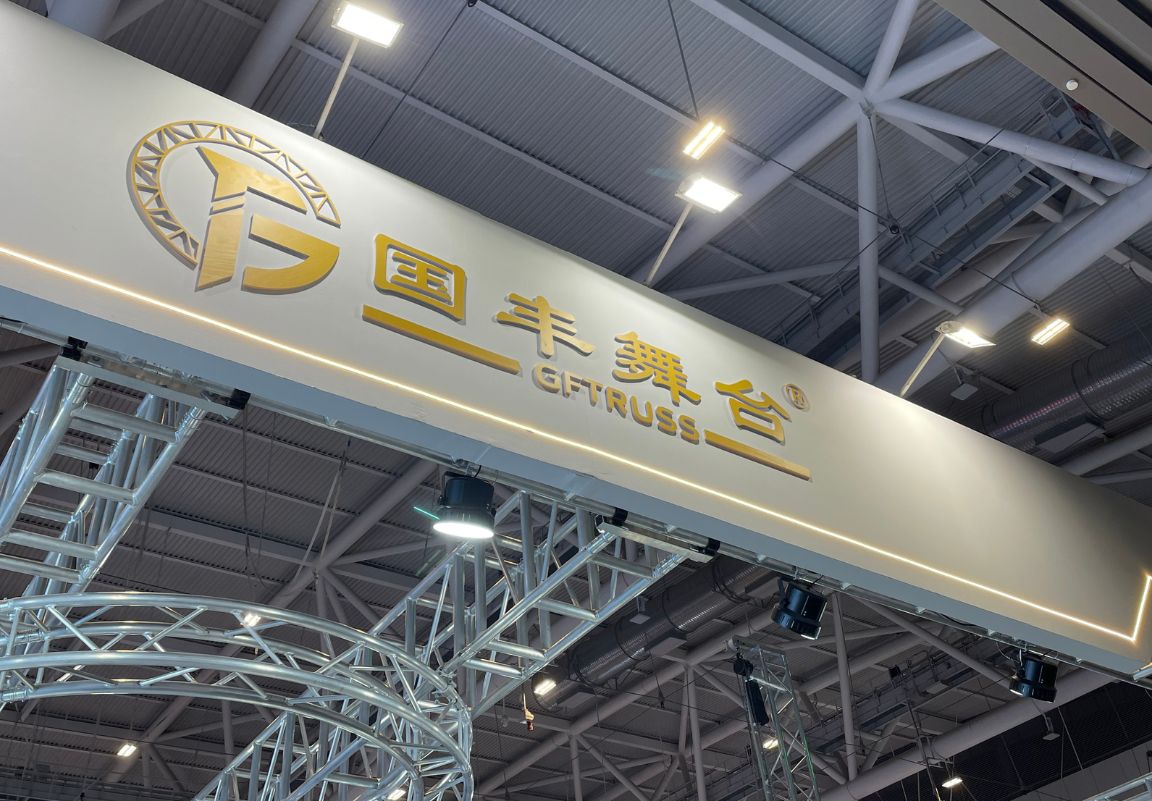
Aluminum truss structures can be integrated into exhibition booth designs for overhead framing and display support.
Select the Truss Type According to the Booth Application
Spigot trusses, bolt trusses, and custom-shaped trusses serve different structural and installation purposes. The correct choice depends on the required configuration, connection details, assembly conditions, and available engineering information.
The following comparison provides a practical starting point for exhibition projects:
| Truss Type | Connection | Typical Considerations | Potential Application |
|---|---|---|---|
| Spigot Truss | Spigots and pins | Quick connection and modular assembly | Exhibition frames, display structures, lighting support |
| Bolt Truss | Bolted connections | Connection configuration and fastening requirements | Modular booth structures and customized installations |
| Custom-Shaped Truss | Depends on the engineered design | Geometry, connection compatibility, and structural verification | Curved frames, special layouts, and distinctive exhibition designs |
Spigot trusses are worth considering when quick assembly and repeated installation are important. Their connecting components allow compatible truss sections to be joined using the specified spigots, pins, and retaining clips. However, all connection components must match the relevant product series.
Bolt trusses use bolted connections and may be suitable for projects where this fastening arrangement matches the structural design and installation process. Buyers should confirm the required bolts, connection details, assembly tools, and tightening procedures before ordering.
Custom-shaped trusses provide more freedom when the booth design includes non-standard angles, curves, or distinctive structural outlines. However, custom geometry requires careful consideration of connection points, load transfer, and fabrication drawings.
These systems should not be treated as interchangeable. A connection method that works for one product series should not automatically be used with another. For exhibition projects involving multiple structural configurations, confirm the complete component compatibility before production.
Match the Truss Structure to Actual Load Requirements
Load requirements are one of the most important factors when choosing an exhibition truss system. A booth carrying only lightweight graphics has a different structural demand from one supporting multiple LED cabinets, lighting fixtures, suspended signs, or other equipment.
Before selecting a truss specification, prepare a complete list of the equipment and materials that will be supported by the structure:
- Lighting equipment: Record the weight and mounting position of each fixture, including any brackets and accessories.
- LED display systems: Consider the weight of the LED cabinets, mounting frames, connecting hardware, and associated equipment.
- Advertising signs: Include suspended logos, banners, and decorative panels in the load assessment.
- Additional components: Account for cables, electrical accessories, and other equipment attached to the structure.
Total weight alone does not determine whether a truss is suitable. Load distribution, concentrated loads, eccentric loading, connection conditions, support positions, and the overall structural arrangement also influence performance.
For example, two exhibition structures may carry the same total equipment weight but have different structural demands. One may distribute equipment relatively evenly across the framework, while the other concentrates several heavy LED displays near a particular section. The resulting bending moments and support reactions may differ considerably.
Engineers should therefore evaluate the complete load path, including the truss members, joints, supporting towers or bases, and the floor or other supporting structure. Deflection limits and lateral stability should also be considered.
Do not select a truss based solely on a general load capacity advertised for another model. Request the applicable manufacturer load tables, technical drawings, and engineering calculations for the exact configuration. Where overhead equipment or suspended structures are involved, a qualified structural engineer should verify the design against the applicable venue requirements and local regulations.
Choose the Appropriate Truss Dimensions and Span
Truss dimensions and span influence the structural behavior, appearance, and installation requirements of an exhibition booth. A larger truss cross-section may offer different structural capabilities from a smaller one, but dimensions alone cannot establish the allowable load or maximum safe span.
When evaluating truss dimensions, consider the following factors:
- Booth dimensions: Match the proposed truss layout to the actual floor plan and available installation height.
- Unsupported span: Identify the distance between structural supports and confirm that the selected configuration is suitable for that span.
- Truss cross-section: Compare the overall dimensions, main tube specifications, diagonal braces, and structural arrangement.
- Visual proportions: Consider whether the truss size is appropriate for the booth design without unnecessarily obstructing signs or display areas.
- Connection details: Ensure that the required corners, connectors, and support accessories are available and compatible.
For reference, GF-Truss offers a 290 × 290 mm aluminum spigot box truss, model V290, designed for exhibition and lighting applications. According to its published product information, the main tubes are Ø50 × 3.0 mm, while the secondary tubes and braces are Ø20 × 2.0 mm. It uses pins and R-clips and is available in several standard lengths from 500 mm to 4000 mm.
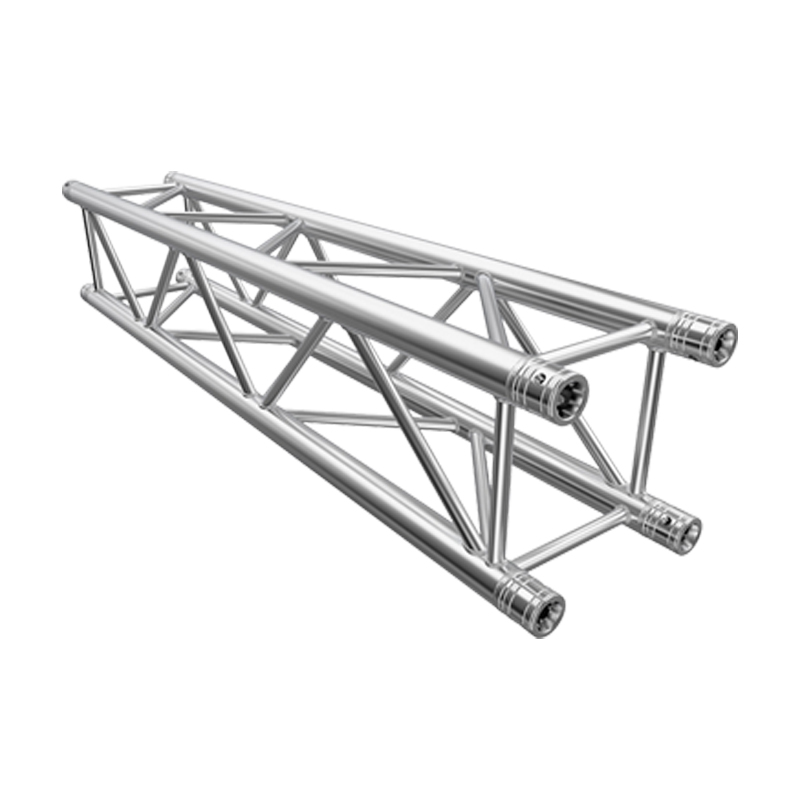
GF-Truss V290 aluminum spigot box truss for exhibition and lighting applications.
This product provides a concrete example of how to evaluate a truss specification. Its published dimensions and connection details can help buyers assess product compatibility and installation requirements. However, its allowable span and load capacity must be confirmed through the applicable technical documentation rather than inferred from its cross-sectional dimensions.
Buyers can review the 290 × 290 mm aluminum spigot box truss product page for its published specifications and available configurations.
Consider Connection Compatibility and Installation Efficiency
Connection compatibility directly affects how efficiently an exhibition truss system can be assembled, modified, and reused. Even when two truss sections appear similar in size, their connection hardware may differ in geometry, dimensions, and fastening requirements.
Before confirming an order, check the following:
- Whether all truss sections belong to the same compatible product series.
- Whether the specified pins, R-clips, bolts, and other connecting components are included.
- Whether the required corners, base plates, and connection accessories are available.
- Whether installation tools and assembly instructions are provided.
- Whether the structure can be assembled within the venue's permitted setup schedule.
Installation efficiency is especially important for exhibitions with short setup and dismantling windows. A modular system with standardized components can simplify inventory management and reduce the number of different parts required for repeated projects.
Nevertheless, fast assembly should never replace proper inspection. Before installation, check the truss members for visible deformation, cracks, damaged welds, and connector wear. Pins, bolts, and retaining devices should be inspected according to the manufacturer's instructions.
A practical approach is to prepare a component list before shipment, identifying every truss length, corner, connector, base, and accessory. This reduces the risk of missing components and unexpected installation delays at the exhibition venue.
Evaluate Ground-Supported and Suspended Booth Structures
A trade show booth truss system can be designed as a ground-supported structure or as a suspended arrangement, depending on the exhibition venue and approved installation conditions. These two approaches have different load paths, support requirements, and approval procedures.
Ground-supported structures transfer their loads through columns, bases, and supporting components to the floor. They may be considered when:
- The booth requires a freestanding overhead framework.
- The venue does not permit overhead suspension for the proposed installation.
- The layout needs integrated vertical supports for lighting or display equipment.
The support bases, column stability, bracing arrangement, and floor conditions must all be evaluated. Where ballast or anchoring is required, its design and installation must follow the approved engineering plan.
Suspended structures transfer loads to approved overhead rigging points. They may be considered when:
- The booth design requires an open floor area without ground-supported columns.
- The exhibition venue provides approved suspension points.
- The proposed rigging arrangement meets the venue's technical and safety requirements.
Suspended truss systems require verification of the complete rigging arrangement, including suspension points, connection hardware, load distribution, and the capacity of the supporting building structure. The venue's approval is essential before installation.
Neither arrangement is universally better. The decision should be based on booth design, venue restrictions, structural calculations, and installation conditions. If the project involves a complex overhead structure, the design should be reviewed by a qualified professional before fabrication.
Check Transportation, Storage, and Reusability
A truss system designed for trade shows is often used across multiple events and exhibition venues. Therefore, purchasing decisions should account for transportation, storage, maintenance, and future configuration changes rather than focusing only on the initial purchase price.
Several practical considerations deserve attention:
- Transportation dimensions: Check the length of individual truss sections against available vehicle space and shipping restrictions.
- Packaging protection: Use appropriate packaging to reduce surface damage and protect connection components during transportation.
- Storage conditions: Keep components organized and protected from moisture, impact, and unnecessary contamination.
- Inspection and maintenance: Establish regular inspection procedures for welds, tubes, connectors, and accessories.
- Future expansion: Check whether additional sections and compatible accessories can be supplied when booth layouts change.
Modular aluminum trusses can be particularly useful for exhibition contractors who work with different booth layouts. Compatible sections may be rearranged into various configurations, reducing the need to purchase an entirely new structure for every event.
However, repeated assembly and dismantling can gradually affect component condition. Reusability depends on proper handling, storage, maintenance, and the continued suitability of the structural configuration. Damaged components should not be returned to service without appropriate inspection and approval.
Confirm Manufacturer Documentation and Quality Requirements
Manufacturer documentation helps buyers determine whether a truss system matches the project's technical and quality requirements. A product description alone is not sufficient for evaluating a structure intended to support equipment or overhead installations.
Before purchasing, request and review the following information where applicable:
- Product drawings showing dimensions, member arrangements, and connection details.
- Material specifications and relevant manufacturing documentation.
- Load tables and engineering calculations for the proposed configuration.
- Applicable test reports and product-specific supporting documentation.
- Inspection procedures and installation instructions.
GF-Truss provides a download center containing technical reports for selected products, including different spigot truss, bolt truss, and LED wall support models. Buyers should check that the report corresponds to the exact product and configuration being purchased.
It is also important to distinguish factory management or welding quality certifications from individual product load testing. A manufacturing-related certification does not automatically establish the allowable load of every truss model or every assembled structure.
For exhibition projects with specific compliance requirements, confirm the applicable standards, documentation scope, and venue approval process before placing an order. This is particularly important for international projects where installation regulations may differ between countries.
Work with a Manufacturer for Custom Exhibition Truss Solutions
Standard truss sections are suitable for many conventional exhibition layouts. However, projects involving unusual booth dimensions, curved structures, special display arrangements, or integrated lighting systems may require a customized solution.
Working with a manufacturer during the design stage helps identify structural and compatibility issues before production begins. Instead of finalizing the appearance first and trying to adapt the truss afterward, buyers should provide the intended layout and technical requirements at the beginning of the project.
Useful information to prepare includes:
- Exhibition venue and indoor or outdoor application conditions.
- Booth floor plan, overall dimensions, and required installation height.
- Equipment list, individual weights, and intended mounting positions.
- Preferred truss type and connection method, if already specified.
- Visual requirements, including straight, curved, or custom-shaped configurations.
- Transportation arrangements, installation schedule, and future reuse plans.
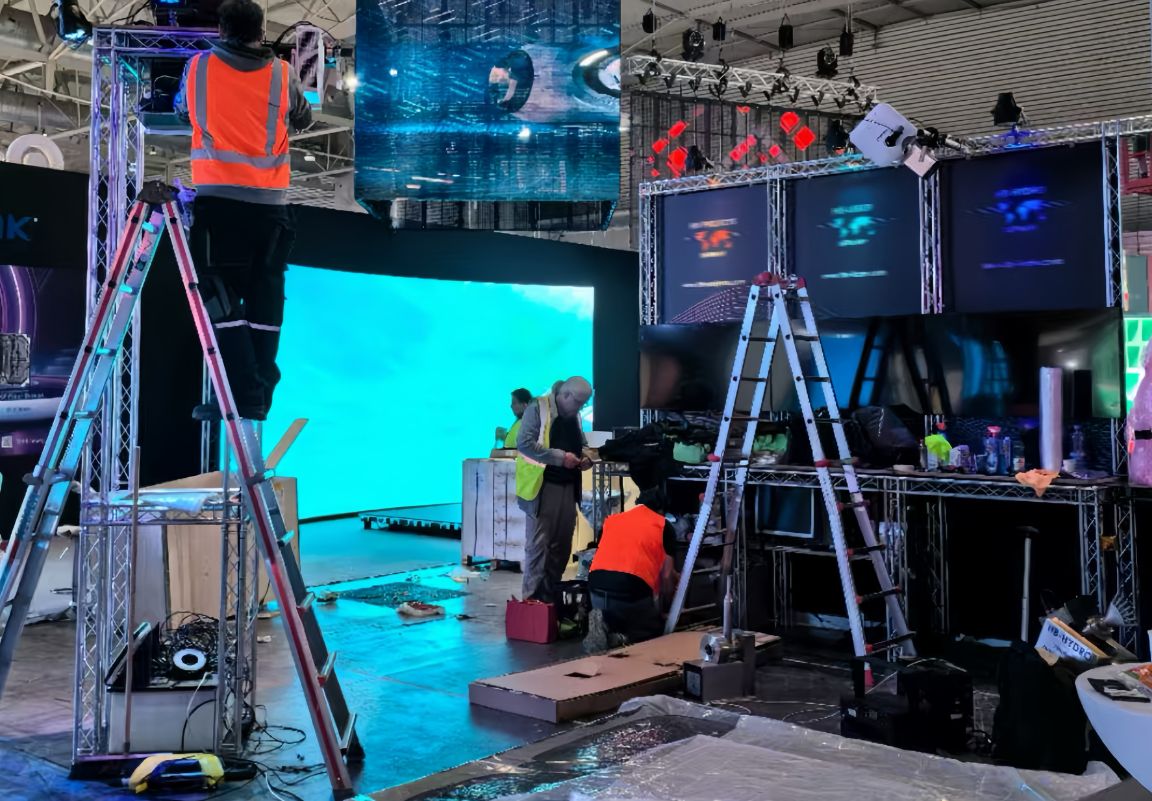
Exhibition truss structures can integrate display screens and lighting equipment within a coordinated booth layout.
GF-Truss offers a customized service covering requirement discussions, CAD design, drawing confirmation, and production arrangements. Its design process takes into account application scenarios, product dimensions, load requirements, connection methods, and customized shapes.
For projects requiring a non-standard configuration, buyers can explore GF-Truss custom truss services to discuss the proposed structure and technical requirements before production.
A Practical Checklist Before Ordering a Trade Show Booth Truss System
A structured purchasing checklist helps exhibition contractors and project managers avoid missing important technical details. Before confirming an order, make sure the following points have been addressed:
- The booth layout, floor dimensions, and permitted installation height have been confirmed.
- All lighting, display, signage, and accessory loads have been identified.
- The truss type, cross-section, and connection system match the proposed design.
- The structural span, load distribution, support conditions, and deflection have been assessed.
- All connectors, corners, bases, and installation accessories are compatible.
- Product drawings, technical specifications, and relevant test reports have been reviewed.
- Venue restrictions and applicable structural safety requirements have been addressed.
- Transportation, packaging, storage, and future reuse requirements have been considered.
The most effective selection process is to establish the application requirements first, compare suitable structural systems second, and confirm the complete engineering and installation details before production. This approach helps reduce unnecessary costs while ensuring that the final configuration is appropriate for the intended exhibition environment.
Frequently Asked Questions About Trade Show Booth Truss Systems
What type of truss is best for a trade show booth?
The best truss type depends on the booth layout, equipment loads, installation requirements, and design complexity. Spigot trusses are worth considering for modular exhibition frames requiring efficient assembly, while bolt trusses may suit projects designed around bolted connections. Custom-shaped trusses are useful when standard sections cannot achieve the required geometry. Structural suitability must always be verified for the specific configuration.
Is aluminum truss suitable for indoor exhibition booths?
Yes. Aluminum truss is commonly used for indoor exhibition frameworks because its relatively low weight and modular construction can simplify transportation and installation. It can be configured for branding structures, lighting support, and display applications. However, the selected product must still meet the project's load requirements, connection specifications, and venue safety regulations.
How do I determine the load capacity required for an exhibition truss?
Start by identifying the weight and position of every item attached to the structure, including LED screens, lighting fixtures, signs, brackets, and cables. Then evaluate load distribution, support conditions, span, and possible eccentric loading. The final capacity must be verified using manufacturer documentation and engineering calculations for the exact truss configuration rather than a general product specification.
Can different aluminum truss brands be connected together?
Not necessarily. Trusses from different manufacturers may have different cross-sections, connection dimensions, pin arrangements, and structural specifications. Even if two sections appear similar, their connectors may not be compatible. Mixing components should only be considered when compatibility and structural suitability have been confirmed by the relevant manufacturers or qualified engineers.
Should I choose a ground-supported or suspended exhibition truss system?
The choice depends on the booth layout and venue installation conditions. Ground-supported systems transfer loads through columns and bases to the floor, while suspended systems rely on approved overhead rigging points. Both arrangements require appropriate structural verification. Always check venue restrictions and obtain the necessary approvals before selecting the final support method.
What information should I provide when requesting a custom exhibition truss?
Provide the booth floor plan, overall dimensions, installation height, equipment list, estimated loads, and intended connection method. Include photographs, reference designs, and any special requirements for curved or customized shapes. Transportation and installation conditions are also useful. These details allow the manufacturer to prepare more accurate CAD drawings and evaluate the proposed configuration before production.
Find the Right Truss Solution for Your Next Exhibition
Choosing the right trade show booth truss system involves balancing structural requirements, booth appearance, installation efficiency, and long-term usability. The most suitable solution is not necessarily the largest or most complicated structure, but the one that meets the project's actual requirements with compatible components and verified engineering support.
GF-Truss provides aluminum spigot trusses, bolt trusses, custom-shaped trusses, and customized structural solutions for exhibition and event applications. From standard modular frameworks to project-specific configurations, the selection process can begin with your booth dimensions, equipment requirements, and installation plans.
If you are planning an exhibition project and need a suitable aluminum truss structure, contact GF-Truss with your design drawings and technical requirements. The team can discuss the available product options and help develop a configuration that matches your project needs.