What Is an HS Code

What Is an HS Code: Principles, Applications, and How to Avoid Mistakes
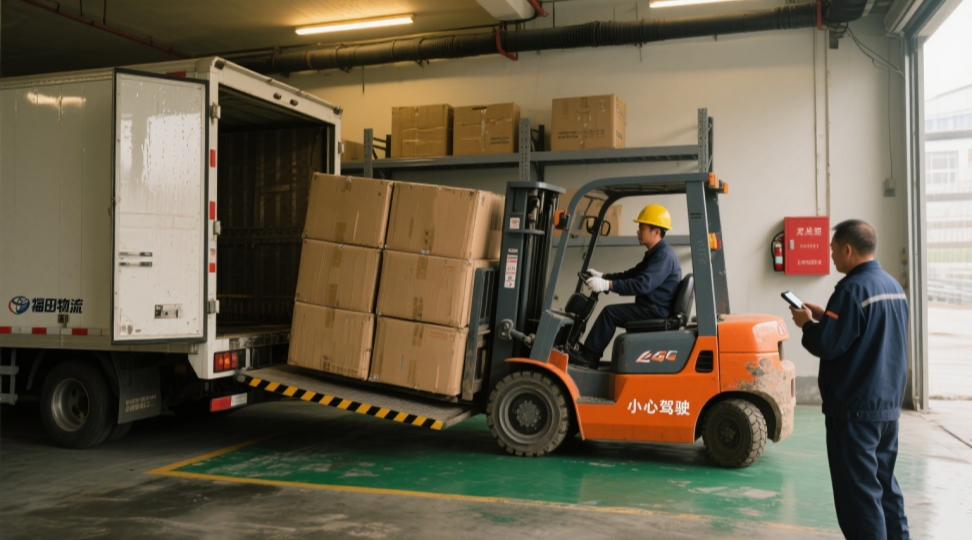
Customs declaration documents showing HS Code for international trade - DR Trans

The HS code (Harmonized System code) is a globally standardized numerical classification of products used in international trade. In the shipping and customs world, the HS code acts as a "product passport," telling governments what goods are. The World Customs Organization (WCO) develops and maintains this system, assigning each product a unique six-digit code that identifies the type of goods, such as machinery, textiles, or food. Through HS codes, exporters and importers can communicate using the same standard language across different countries, reducing customs clearance errors, speeding up customs clearance of goods, and ensuring compliance with import and export regulations of various countries.

The HS code’s basic structure is systematic. Each 6-digit HS code has three parts: the first 2 digits (Chapter) are a broad category, the next 2 (Heading) narrow it down, and the final 2 (Subheading) identify the specific product. For example, HS code 090210 means:

  • 09 = Chapter for “Coffee, tea, maté and spices,”

  • 0902 = Heading for “Tea”,

  • 090210 = Subheading for “Green tea, not fermented”.

Digits Segment Example (Green Tea)
2 Chapter 09 – “Coffee & Tea”
4 Heading 0902 – “Tea”
6 Subheading 090210 – “Green Tea”

While the first 6 digits are international, countries may extend them. For instance, the U.S. appends extra digits to create a 10-digit HTS code (Harmonized Tariff Schedule). Likewise, Chinese HS codes include more digits: China now uses a 13‑digit format (the first 8 digits match China’s tariff schedule, plus 5 extra digits for customs and inspection). These extensions serve national needs (e.g., specific duties or quarantine rules), but the 6-digit base remains consistent globally.
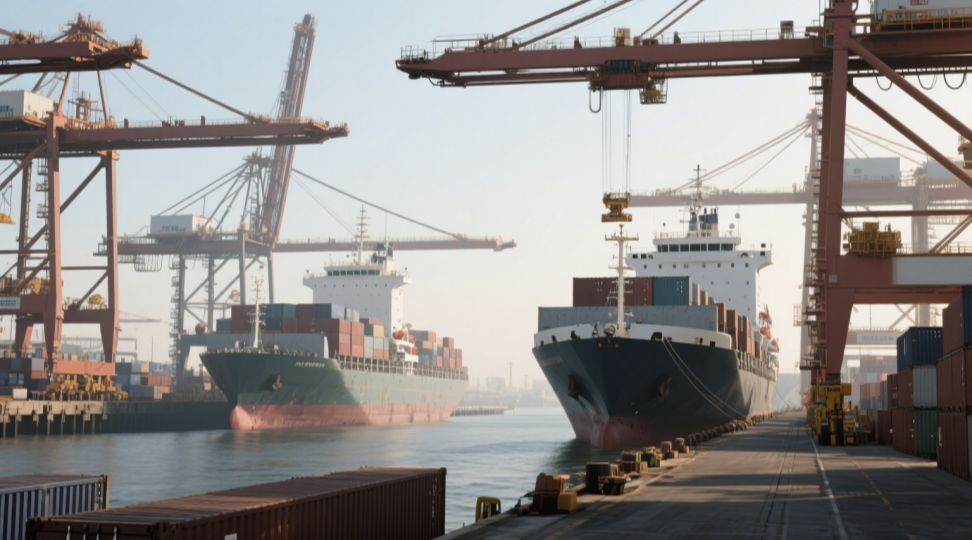
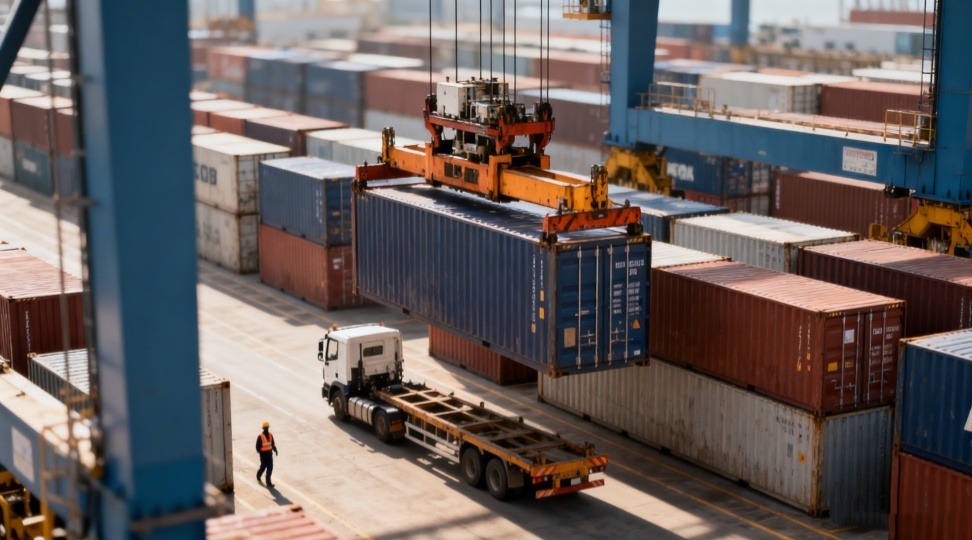
Port workers loading and unloading cargo using HS Code for customs clearance - DR Trans

Why HS Codes Matter

HS codes play a crucial role in international logistics and trade. Customs use HS codes to classify your products, and tariffs, taxes, and required documentation vary depending on the product. For example, customs officials around the world use HS codes to determine duty rates and whether you need a license. An accurate HS code ensures your goods receive the correct tariff (including any free trade agreement rates) and ensures smooth customs clearance.

  • Trade and Tariffs: HS codes directly impact import tariff rates. Using an accurate code can result in lower tariffs under trade agreements. Inaccurate codes typically result in higher tariffs.

  • Compliance: Governments use HS codes not only to set tariffs but also to enforce trade policies, quotas, and controls on restricted goods. Customs checks HS codes against import and export licenses, safety standards, and rules of origin.

  • Documentation: All shipping documents (commercial invoices, packing lists, bills of lading, certificates of origin) must list the HS code. It serves as an essential shipping identifier.

  • Statistics & Research: Businesses and governments rely on HS codes to collect import and export data. You can import data based on HS codes to analyze the market. Market analysts often say HS codes are key to understanding trade trends.

  • Logistics Efficiency: HS codes help carriers and freight forwarders organize shipments. For instance, carriers may use HS codes to verify cargo descriptions against manifests, helping reduce misrouting.

In short, HS codes streamline trade processes. They provide a common language, reduce customs delays, improve tariff accuracy, and simplify cargo tracking. The World Customs Organization notes that this shared system saves costs by harmonizing customs procedures worldwide.

Consequences of Using Wrong HS Codes

Using the wrong HS code can cause serious problems. Customs authorities may reject your documents, detain your goods, or impose fines. Misclassified goods may be charged the wrong tax rate, resulting in underpayment or overpayment.

  • Delays & Seizures:  If customs detects a misclassification of your goods, they may be delayed or even detained for inspection. For example, if the importer requires a more specific 8-digit HS Code and you only submit a 6-digit HS Code, this can result in customs clearance delays and additional scrutiny.

  • Fines & Fees: Wrong codes often lead to under-declared duties. This risks fines or forced payment of back duties. In some high-profile U.S. cases, companies settled for tens of millions of dollars due to misclassification.

  • Legal/Compliance Risks: Consistent errors may flag a company for non-compliance or even smuggling investigations. In China, incorrect HS codes can downgrade a company’s credit or put it on a government watchlist.

  • Lost Benefits: Using a less specific code might make your goods ineligible for special tariff programs. For instance, you might miss out on a preferential trade agreement rate just because the HS code was too generic.

Overall, “get it wrong and you could face fines, audits, delays, or worse consequences”. Companies must take HS classification very seriously.

How to Avoid HS Code Errors

To prevent costly mistakes, follow these best practices:

  • Research Thoroughly: Use official HS classification tools. For example, the U.S. Census Bureau’s free Schedule B search engine lets exporters look up HS codes by product description. The US Customs “CROSS” database of tariff rulings can also help verify tricky cases. Many countries have similar online tariff lookup tools (China Customs has a tariff database, the EU has TARIC, etc.).

  • Provide Clear Details: Give as much information about your product as possible (material, use, specs). Customs classifies by detailed descriptions, so vague terms can lead to errors.

  • Double-Check Updates: HS codes change roughly every 5 years when the WCO updates the system. Always use the latest tariff schedule. After an HS revision, even minor number changes can apply. Consult the current regulations or a customs expert.

  • Consult Experts: Work with experienced customs brokers or freight forwarders. For example, DR Trans’s team offers customs declaration support as part of our services. A knowledgeable partner can help ensure you apply the correct codes and documentation.

  • Cross-Verify: If in doubt, cross-check multiple sources. For instance, confirm that the first 6 digits match in different country schedules (US HTS, Chinese tariff, etc.), since the HS backbone is the same. This also addresses “HS code vs HTS code” confusion: remember that the first 6 digits are identical globally, but a country’s HTS adds extra digits.

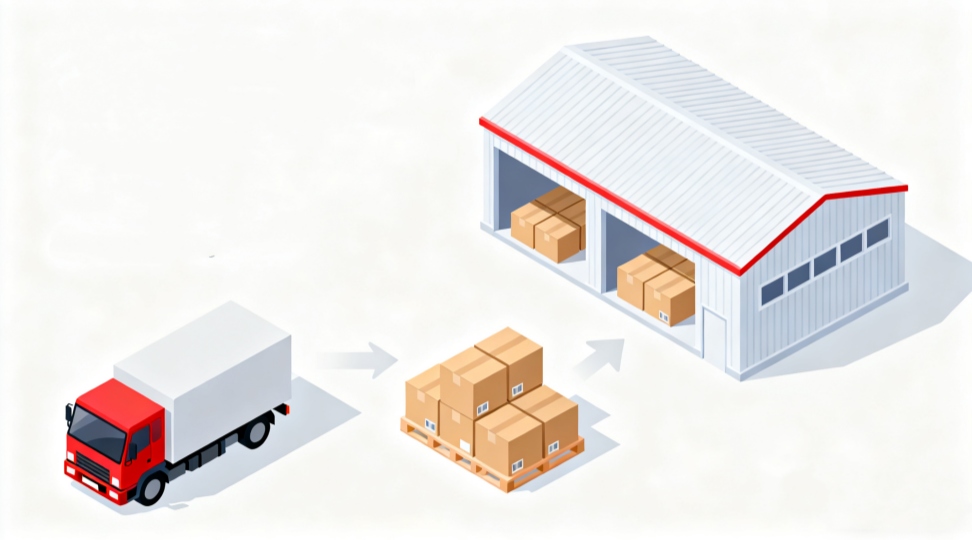
Container ship transporting goods internationally with HS Code classification - DR Trans

By taking these steps, you’ll minimize the risk of classification errors. As one compliance guide notes, accurate classification is critical – it “minimizes delays, reduces the risk of disputes, and helps avoid penalties”.

Applications of HS Codes

HS codes are used in many fields beyond simple shipping:

  • Customs & Tariffs: The obvious application is assigning tariff rates and handling customs clearance. Any shipment must list the correct HS code to comply with import regulations.

  • Trade Policy & Controls: Governments use HS codes to apply trade restrictions or quotas on sensitive categories (like arms or hazardous materials). They also use them to implement sanitation or inspection rules on food and plants.

  • Market Analysis: Analysts and companies use HS-based trade data to study markets. For example, one can retrieve import data by HS code to see how much of a product is being shipped to or from a country. Exporters often research HS code statistics to identify demand or competition.

  • Regulatory Compliance: Agencies track controlled items (chemicals, pharmaceuticals, etc.) by their HS codes. Exporters of sensitive goods must know the correct code to follow the export control laws.

  • Supply Chain & Logistics: Freight forwarders and carriers group cargo by HS codes to optimize shipments. HS codes also feed into trade finance and insurance systems, which rely on product classification.

  • Statistical Reporting: Customs agencies compile national trade statistics using HS codes. These are used in economic reports, balance-of-trade calculations, and policy decisions.

In all these areas, HS codes are a universal language. The WCO calls HS “the foundation of international trade classification”. By using them correctly, businesses can ensure consistent handling of goods worldwide.

How to Find the Correct HS Code

Finding the right HS code for a specific product often involves these steps:

  1. Consult Customs Websites: Many countries publish tariff books online. For example, as mentioned, the U.S. Schedule B search (census.gov/scheduleb) and HTS database are free to use. China’s customs website also allows HS code lookup. Use the search by keyword (product name) on those sites.

  2. Use Global HS Directories: The World Customs Organization provides tools (HS Explanatory Notes and the HS Database) for official guidance. There are also commercial HS code finders and databases (often subscription-based).

  3. Check Product Descriptions: Carefully match your product to chapter headings. Guides like the WCO HS “Section Notes” or country-specific tariff notes help distinguish similar items.

  4. Ask the Exporter/Importer: If you are shipping, sometimes the buyer or seller already has the HS code they use. Just verify it’s correct for your goods.

  5. Seek Expert Help: Complex products (mixtures, mechanical sets, etc.) may require professional classification. Logistics firms or customs brokers can classify goods based on technical sheets.

  6. Remember Local Variations: If you trade with China, use the Chinese-specific format. Chinese HS code entries are now 13 digits (10 digits plus 3 for inspection). Always include all required national digits when declaring in that market.

  7. Cross-Reference: Ensure that the first 6 digits match across countries. For instance, an item with HS 6-digit code 620312 (men’s cotton suits) will share those digits internationally even if the U.S. HTS adds 4 more digits.

By following these methods, you’ll be able to find HS code information reliably. For example, if you have trouble, remember that the US Census “Schedule B search” and the Customs CROSS database can guide you to the HS code. In addition, a freight forwarder like DR Trans can advise you on classification as part of our customs clearance services.

FAQs

  • Q: What is HS code vs HTS code?
    A: HS codes are the 6-digit international standard managed by the WCO. HTS codes (Harmonized Tariff Schedule) are country-specific extensions. For example, the U.S. uses 10-digit HTS codes (first 6 digits = HS code) for imports. In other words, HS code and HTS code differ only by the extra digits a country adds for more detail.

  • Q: How important is it to get the HS code right?
    A: Very important! An incorrect HS code can lead to shipment delays, extra inspections, and higher costs. Customs can seize goods or impose fines if they suspect misclassification. Always double-check to avoid these issues.

  • Q: How do I find the correct HS code for my product?
    A: Start with official tools. Search your product on your country’s customs tariff website (e.g., U.S. Census Schedule B or China’s tariff site). You can also consult the HS code index or get help from a customs broker. If you still have doubts, services like DR Trans’s customs specialists can assist with classification and provide answers.

  • Q: If I export from China, what HS code should I use?
    A: Use the Chinese HS code format. As of 2018, China’s system is 13 digits (the first 8 are from China’s tariff schedule, and digits 9–13 cover customs/quarantine specifics). Be sure to include all digits when declaring in China.

  • Q: How can DR Trans help with HS codes?
    A: DR Trans is an international freight forwarder with experience in customs procedures. We offer full logistics solutions (rail, truck, air, sea) that include customs declaration and clearance. Our team helps clients navigate HS codes, paperwork, and compliance to ensure shipments move smoothly.

Conclusion

The HS coding system is the backbone of global shipping classification. It's essential to ensure that every product has a clear numerical identifier when it's declared for customs. Understanding the meaning of HS codes and how they work can help you avoid tariff issues and delays. Ensure your products use the correct HS codes and stay updated on regulatory changes. If you need a more professional team to help you transport your goods, contact DR Trans International Logistics and Transport. We have fifteen years of international logistics experience and offer services like customs clearance, loading and unloading, and more, ensuring your international trade is compliant and efficient.
What Is the Difference Between a Port and a Terminal in Freight?

What Is the Difference Between a Port and a Terminal in Freight?
Ports and terminals are critical components of international freight logistics and global supply chains. A port is a waterfront facility where ocean-going vessels dock to load and unload goods, connecting sea routes with land transport. In fact, maritime transport moves the lion’s share of world trade – “more than 80 percent of goods are transported by sea”. Ports serve as major hubs that link ships, trucks, and trains, enabling freight forwarders, e-commerce companies, manufacturers, and import/export businesses to move cargo worldwide. A terminal, by contrast, is a specialized cargo-handling facility either within a port or at an inland location. Terminals focus on transferring freight between modes (ship, rail, truck) and sorting or storing cargo. Understanding how ports and terminals differ helps shippers plan efficient routes and avoid delays in global logistics.
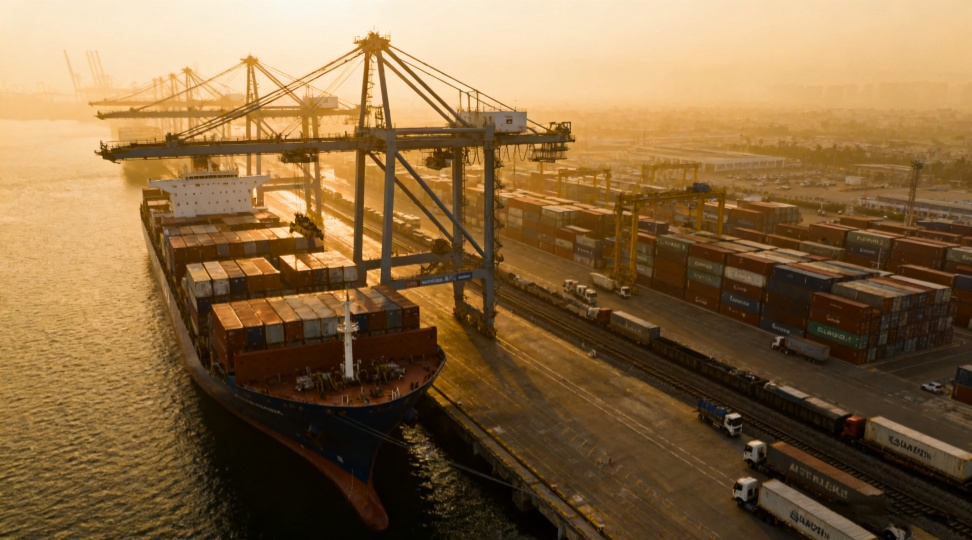
Aerial view of a busy seaport and container terminal with ship-to-shore cranes unloading containers.

Even at night, busy container terminals (like the one above) operate 24/7 to handle trade volumes. Modern ports and terminals operate 24/7 to ensure continuous freight movement. Ports are the gateways to a region’s maritime trade, while terminals are the workhorses inside those gateways. For example, IncoDocs explains that “a port is a vital hub in the global supply chain where goods are loaded and unloaded, connecting sea transport with land-based logistics”. Ports have docks, berths, customs offices, and large storage areas to process incoming and outgoing cargo. Terminals are specialized sections (often referred to as berths or pavilions) where actual container handling or bulk unloading occurs. This functional split is the key difference: a port is the broad site where ships come in, whereas terminals are the precise facilities that handle specific cargoes.


What Is a Port?

Ports are maritime gateways that connect oceans to hinterland markets. They are broad transport hubs managed by port authorities or government agencies. In practice, a port typically includes multiple terminals along its coastline, plus supporting infrastructure. Ports serve four main transportation modes (sea, truck, rail, and sometimes pipelines) in one place. Key features of a port include:

  • Intermodal Hub: Ports unite ocean shipping with land transport. For example, one port can handle cargo from container ships, then transfer it to trucks or trains for inland delivery. This makes the ts central nodes in the global supply chain.

  • Infrastructure: Ports are equipped with berths (docking spaces), quay walls, large container yards, warehouses, customs inspection facilities, and access roads. They often have heavy-duty cranes, forklifts, and conveyor systems to move cargo.

  • Regulatory Functions: Government and customs services are usually based at ports. All imports and exports are cleared here. Ports enforce security, safety, and environmental rules for incoming vessels and cargo. In short, the port authority oversees the entire maritime operation at that location.

  • Economic Hub: Ports generate jobs and business for the surrounding region. They attract industries (like shipping agents, logistics companies, and factories) because of their connectivity. Handling millions of tons of goods each year, major ports drive regional trade volumes.


Ports vary in size and focus. A seaport (coastal port) handles international sea cargo and passengers. An inland port (or dry port) is far from the coast – often a rail/road terminal acting as an extension of a seaport. For example, an inland port might receive containers by rail from a seaport and distribute them locally. But no matter the type, all ports serve as entry-exit points for trade. As LogiWorld puts it, ports are “vital gateways in the global supply chain” with extensive facilities to handle diverse cargoes.


What Is a Terminal?

A terminal is a specialized cargo handling facility, and it can exist either within a port or independently at an inland site. Terminals are where the actual loading, unloa, and transfer of freight happens. In logistics, the term “terminal” covers a broad range of facilities, including:

  • Port (Seaport) Terminals: Specific sections of a seaport dedicated to one cargo type. For example, a container terminal within a port has cranes and container yards for box cargo. A bulk terminal has conveyor belts and silos for coal,  grain, or minerals. A RoRo (roll-on/roll-off) terminal handles vehicles. These terminals sit inside the larger port area.

  • Inland/Intermodal Terminals: Standalone sites not on the coast. These may be near rail lines, highways, or airports. They act as hubs where cargo moves between trucks, trains, or planes. For example, a rail freight terminal (sometimes called a dry port) allows shippers to load cargo containers onto trains for long-haul travel. Inland terminals often provide storage, customs clearance, and last-mile transshipment.

  • Private Freight Terminals: Facilities owned and run by private firms for their own or selected use. A private freight terminal (PFT) is a private cargo facility connected to ports, railways, or highways. It may serve one company or consortium exclusively, offering custom schedules and dedicated infrastructure.
    Close-up of gantry cranes lifting containers and stacked containers in a terminal yard.

Terminals are heavily geared toward operations. They have specialized equipment – tall gantry cranes, forklifts, hoppers, conveyor belts, etc. – and skilled teams for fast cargo handling. As one logistics guide explains, each terminal “focuses on handling specific types of cargo” and uses those machines to load, unload, and sort goods efficiently. For instance, the container terminal in a port is configured only for shipping boxes: it will have large ship-to-shore cranes and a huge paved yard to stack containers. In contrast, a bulk terminal has conveyors and silos to manage loose cargo like grain or minerals.

Terminal operations typically follow a flow:

  1. Quay/Platform Operations: When a ship docks, cargo is unloaded at the quay (portside platform). Cranes lift containers or bulk off the ship and onto waiting vehicles or onto the quay itself.

  2. Yard Storage Operations: The cargo is moved to the terminal’s storage yard. Containers are stacked in lots, and bulk materials are placed in yards. The yard is organized by cargo type and destination to keep things accessible.

  3. Gate (Intermodal) Operations: After yard processing and customs clearance, cargo exits the terminal by road or rail. Trucks or trains pick up the goods and leave the terminal, continuing the shipment’s journey.

In short, a terminal is like a tailored sub-hub for freight within the larger port or logistics network. It does the hands-on work of cargo transfer, whereas the port provides the overall environment (land, water access, authority, and infrastructure).


Key Differences: Port vs Terminal

Although ports and terminals work closely together, they differ in scope and function:

  • Scale and Scope: A port is a large area including one or more terminals, plus open spaces, docks, ks, and services. It is the entire maritime complex. A terminal is a specific part of that complex (or an inland site) focused on cargo handling. You can think of a port as a city and terminals as the specialized districts inside it.

  • Function: Ports manage the big picture – they welcome ships, provide navigation access, and link sea freight to land transport. Terminals zero in on the details of cargo handling. Each terminal concentrates on one segment of freight: container terminals handle boxes, vehicle terminals handle cars, etc.

  • Ownership and Management: Ports are usually run by public port authorities (government or state entities) responsible for the whole port area. Terminals, on the other hand, are often leased and operated by private companies. For example, a port authority might own the land, but a shipping line or logistics firm leases a terminal berth to handle containers. This model is common worldwide. As noted in industry sources, “Terminals are often operated by private companies or organizations”, whereas port-wide operations fall under port authorities.

  • Regulatory Role: Port authorities oversee safety, security, and customs for the entire port. Terminals follow those regulations but focus more on operational efficiency. In practice, a port authority might enforce an environmental policy, and each terminal ensures its own operations comply.

  • Infrastructure: Ports provide general infrastructure (harbor, breakwaters, channel dredging), while terminals have specialized infrastructure inside the port (cranes, rail tracks, warehouses) and handle day-to-day cargo movement.

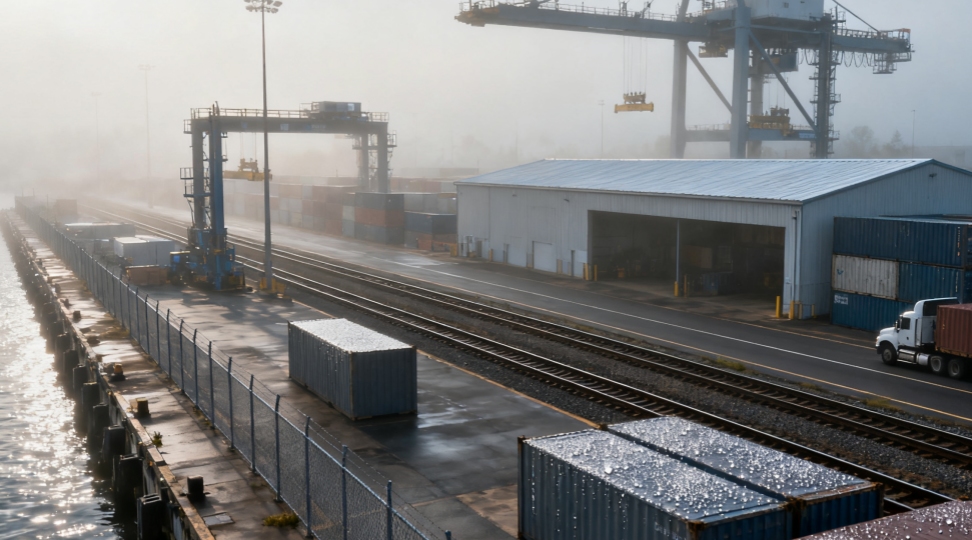
Private freight terminal next to an industrial port with dedicated rail spur and truck lanes.

In summary, “Ports are large facilities that include multiple terminals. They connect sea and land transportation… Terminals, on the other hand, are smaller sections within ports. Each terminal focuses on specific activities, like handling containers or bulk goods. The port is the broad gateway, and terminals are the cargo specialists within that gateway.


Types of Ports and Terminals

Ports and terminals come in various types tailored to different logistics needs. Common port types include:

  • Seaport (Ocean Port): On a coastline, handling international ship traffic. Examples: Port of Shanghai (China) or Port of Los Angeles (USA).

  • Inland Port (Dry Port): An inland logistics hub linked by rail/road to a seaport. It offers customs and warehouse services away from the coast. (e.g., an inland rail hub in Germany fed by Rotterdam port.)

  • River Port: On a navigable river (e.g., Hamburg on the Elbe, China’s Yangtze River ports).

  • Multi-modal Hub: Some ports function as large intermodal centers with close rail/road/air links.


Terminal types span cargo categories:

  • Container Terminal: Handles standard shipping containers. Equipped with gantry cranes and yard space. Most of the world’s containerized freight moves through these.

  • Bulk Terminal: Handles unpackaged bulk commodities (coal, grain, ore, oil, LPG, etc.). Uses conveyor belts, ship unloaders, storage domes/silos.

  • RoRo Terminal: Designed for “Roll-on/Roll-off” cargo (cars, trucks, machinery). Ships dock directly onto ramps so vehicles can drive on/off.

  • General Cargo / Breakbulk Terminal: For non-containerized general freight (pallets, crates, project cargo). May include large sheds and gantry cranes.

  • Multi-purpose Terminal: Flexible design to handle several cargo types as needed.

  • Private Freight Terminal: Dedicated cargo facility owned by a private company rather than the port authority. These are often located near a port, railway, or factory and serve specific customers. They offer exclusive scheduling and customized operations.


Each terminal is optimized for its cargo type. For example, a container terminal will have precise slotting in container yards and advanced crane automation. A liquid bulk terminal will have pipelines and storage tanks for oil or chemicals. Even within one port, terminals are compartmentalized by cargo or shipping line.


Importantly, terminals also handle inland transfer (not just at the port gate). Many cargo terminals act as intermodal transfer points – for instance, an inland rail terminal where containers are moved from trucks to trains. These function like an “inland port” for distribution.


Ports and Terminals in Global Logistics

Ports and terminals underpin the global freight network. Consider some figures and players that highlight their scale:

  • Sea Freight Dominance: According to the World Bank, “maritime transport is the backbone of global trade, as more than 80 percent of goods are transported by sea.”. In practical terms, this means nearly all bulk and container goods cross oceans.

  • Cargo Volume: Major container ports process enormous throughput. For example, the Port of Shanghai (China) – the busiest in the world – handled about 51.5 million twenty-foot equivalent units (TEUs) in 2024. Other top ports (Singapore, Ningbo-Zhoushan, Shenzhen, etc.) each handle tens of millions of TEUs annually. This reflects the huge volume of cargo passing through terminals.

  • Terminal Operators: The world’s largest container terminal operators each move tens of millions of TEUs per year. Industry data show leading operators like PSA International (Singapore) processed around 94.8 million TEUs in 2023, Hutchison Ports about 82.1 million TEUs, and DP World roughly 81.5 million TEUs. (For perspective, these figures combine all their global terminals.) These private companies run many of the busiest container terminals worldwide.

  • Major Port Companies: Leading port and terminal owners include global firms such as APM Terminals (Maersk), DP World (UAE), COSCO Shipping Ports (China), Adani Ports (India), Hutchison Port Holdings (Hong Kong), PSA International (Singapore), and others. Each of these giants manages a network of terminals on multiple continents.

  • Regional Logistics: In Europe, major North Sea ports like Rotterdam and Antwerp each moved around 10+ million TEUs in 2024. In the US, the Los Angeles/Long Beach port complex handles about 10 million TEUs per year (serving Pacific trade). And new ports (e.,g. Tanger Med in Morocco) are growing rapidly due to their strategic location.


These volumes highlight that ports and terminals are the engines of trade. Freight forwarders, e-commerce firms, manufacturers, and import/export companies all depend on them. Efficient port-terminal operations mean faster shipments and lower costs. For instance, faster unloading at a congested port can reduce demurrage fees and lead times. DR Trans leverages this infrastructure: as a global logistics provider, we schedule containers through the best routes and terminals for each cargo. Our network spans sea, rail, and road, so we can optimize shipments for speed and reliability.


These official figures (from industry reports and port authorities) demonstrate the sheer scale of container movement through ports and terminals each year.


Private Freight Terminals and Ownership

A private freight terminal (PFT) is a cargo facility owned and operated by a private company instead of the public port authority. In practice, a company (or consortium) invests in building a terminal – often next to a port or on rail-connected land – and runs its own shipping and storage operations. For example, in India, the government introduced a Private Freight Terminal policy encouraging firms to lease railway land and develop dedicated cargo terminals.


The advantage of a private terminal is exclusivity and customization. Unlike congested public terminals, a private terminal can offer scheduled slots, tailored equipment, and streamlined procedures. As one logistics guide notes, private facilities “offer exclusive availability, responsive scheduling and custom-designed operations” for their owners. In other words, companies that rely heavily on cargo (like large retailers or manufacturers) can avoid delays by using a private terminal.


Globally, many major terminals are effectively private. For instance, almost all large container terminals in Europe or Asia are operated by private port companies. Hutchison Ports’ terminal in the Port of Felixstowe (UK) and DP World’s terminal at Jebel Ali (UAE) are examples where private firms run the infrastructure under concession. Even in the U.S., some terminals (like those run by Ports America) are public-private partnerships. In short, private terminals have become integral to port operations worldwide.
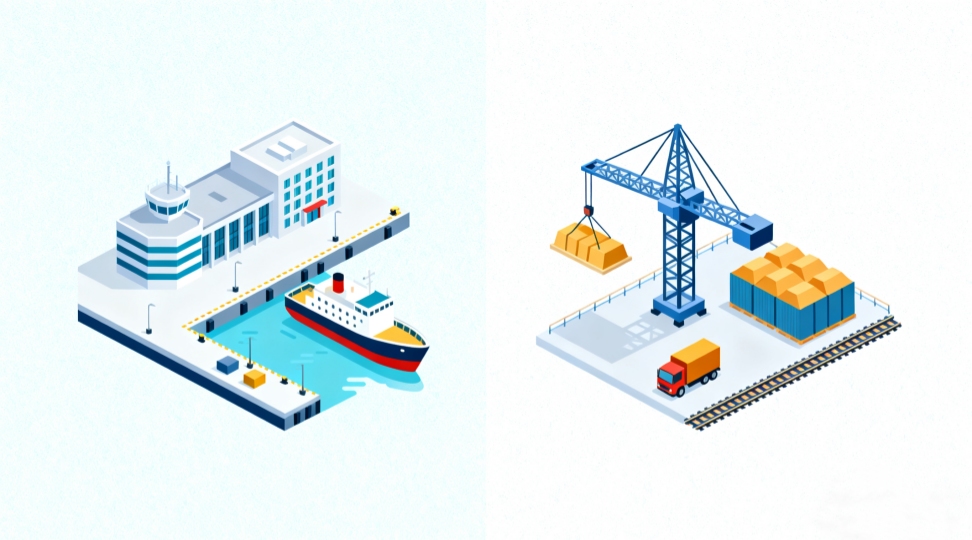
Icon-style infographic composition comparing port elements and terminal elements (no text).

Private terminals tie back to your logistics through companies like DR Trans. We can help you utilize these facilities: if your cargo qualifies, we’ll route it through a dedicated private terminal or booking line to speed up handling.


FAQ – Ports, Termina, ls and DR Trans

Q: What is the main difference between a port and a terminal?
A: Simply put, a port is the larger maritime facility on a coast (or river) that includes docks, customs, ro, and multiple terminals. It is managed by a port authority and serves as the overall gateway for ships. A terminal is a specific cargo-handling facility either inside that port or at an inland location. Terminals focus on loading and unloading specific cargos (containers, bulk, vehicles, etc.) with specialized equipment. In cargo flow, goods will often move from a ship at a port into a terminal for processing.

Q: What is a “private freight terminal”?
A: A private freight terminal is a cargo terminal owned and run by a private company. Unlike public pterminalswhere anyone can ship, a private terminal is dedicated to certain shippers or tenants. These terminals offer exclusive use of berthing slots and equipment, which can reduce wait times. They are usually connected by road, rail, or sea to major transport routes, giving companies control over their supply chain.

Q: Who uses s DR Trans service, and how do we help?
A: DR Trans serves a wide range of clients: freight forwarders, e-commerce businesses, manufacturers, and general import/export companies, all trust us for logistics. We help these companies ship freight efficiently by leveraging our expertise in ports and terminals. For example, we plan shipments through optimal terminals to minimize delays. We handle booking at both ocean ports and inland terminals, manage customs paperwork, and coordinate inland trucking or rail connections. In short, whether you need to move containers across the Pacific or bulk goods by rail, DR Trans offers a single partner that navigates ports and terminals on your behalf.

Q: What steps can I take to improve my port/terminal shipping?
A: When planning international shipments, consider these tips:

  1. Choose the right port/terminal: Select a port close to your supply or market that has the capacity and services you need. For example, use major container terminals for high-volume cargo.

  2. Book terminal space early: Popular terminals can fill up, so reserve loading or unloading slots in advance. Private freight terminals often allow earlier scheduling for their clients.

  3. Use intermodal connections: If possible, pick a terminal with good rail or trucking links to reduce transit time.

  4. Work with experts: A freight forwarder like DR Trans can advise on the best port-terminal combination and handle all the logistics details.


Conclusion and Next Steps

Ports and terminals each play distinct but complementary roles in freight logistics. Ports are the large gateways where international cargo enters and exits a country. Terminals are the workspaces where the cargo is handled and transferred. Understanding the difference – and how each facility operates – helps companies streamline their supply chains.


At DR Trans, we navigate this infrastructure for you. We know which ports and terminals match your cargo type and schedule. By choosing efficient routes (including private freight terminals when advantageous), we help avoid bottlenecks and cut transit times. Our global network covers major ports and inland terminals, giving you flexibility.


Ready to optimize your shipping? Contact DR Trans today to learn how we can manage your freight through the right ports and terminals. We’ll provide personalized advice and quotes to keep your cargo moving smoothly. Let us handle the complexities of international logistics so you can focus on your business.

What Is TIR?

What Is TIR?

What Is TIR? The TIR system (from French Transports Internationaux Routiers, meaning International Road Transport) is a global customs transit convention designed to simplify cross-border freight. In practice, what is TIR? It is an international transit regime whereby trucks carry goods in sealed compartments under a single customs guarantee. TIR has evolved into “the only globally applicable international customs transit and guarantee system”. Today, the UN-backed TIR Convention covers 78 contracting parties (including all EU members). This makes TIR “the only universal Customs transit system in existence”. In other words, TIR transports – often called TIR transport – can move seamlessly across dozens of borders in Europe, Asia, and beyond under a common set of rules and guarantees.

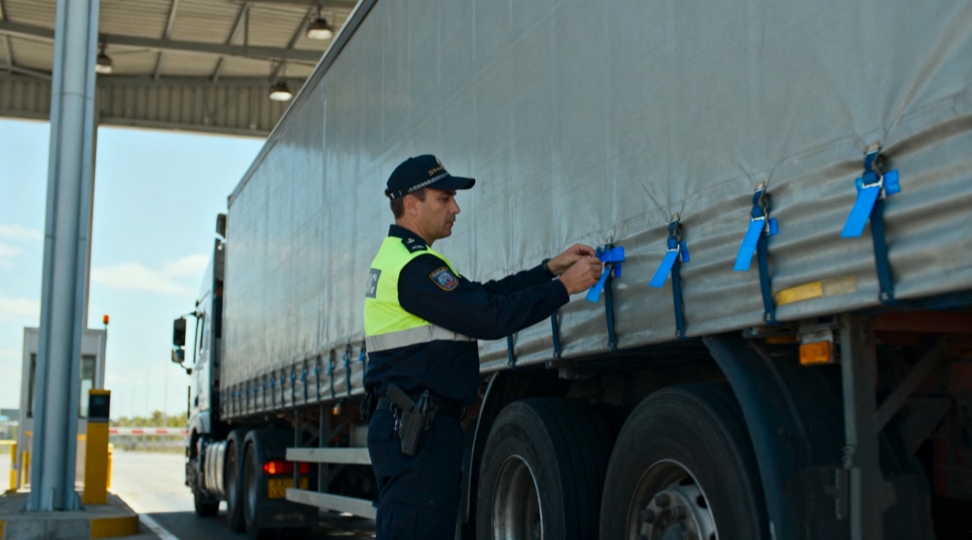
TIR transport at international border — secure sealed cargo

Using TIR, a single international TIR carnet (customs document and guarantee) covers an entire multi-country journey.  That roughly 10,000 transport companies use TIR, issuing carnets to about 80,000 trucks each month. For exporters, this means that cargo can travel without paying duties at every border. Instead, customs officials seal the load at departure and check the seal at each frontier. The result is faster, cheaper, and more secure transit. TIR can cut transport time by up to 80% and costs by up to 38% compared with conventional transit procedures.

Indicator Value
TIR Contracting Parties 78 (including the EU)
Authorized Transport Operators 30,000+ worldwide
Annual TIR Transport Operations ~1,000,000 shipments/year
TIR Carnets Issued (approx.) ~960,000 per year (80,000/month)

What is TIR? Understanding the Basics

TIR, at its core, is a global customs transit system established under the United Nations TIR Convention (Transports Internationaux Routiers). It's designed to simplify and accelerate international road transport while ensuring appropriate customs controls and duties collection. But what is TIR in practical terms? It's a system that allows goods to be shipped from a country of origin to a destination country with minimal interference at border crossings, using standardized procedures and documents.

The TIR system operates on several key principles that distinguish it from conventional international road transport:

  • Single guarantee: One internationally valid guarantee covers customs duties and taxes throughout the journey

  • Mutual recognition: All participating countries recognize customs controls performed in other member states

  • Secure vehicles: Goods must be transported in secured vehicles or containers that prevent unauthorized access

  • Single document: One document (the TIR Carnet) serves as the control document throughout the journey

The system currently includes over 70 member countries spanning Europe, Central Asia, the Middle East, and North Africa, creating an extensive network that facilitates trade across continents.

How TIR Transport Works?

Understanding the TIR procedure is essential for businesses considering this transport method. The process follows a carefully structured approach:

  1. Route Planning and Preparation: The transporter plans a route passing through TIR member countries and ensures all requirements are met, including proper vehicle certification and documentation.

  2. Departure Formalities: At the initial customs office, the goods are presented along with the TIR Carnet. Customs officials examine the shipment, verify the Carnet, and apply customs seals to the secured vehicle or container.

  3. Transit Through Intermediate Countries: As the vehicle crosses through intermediate countries, customs authorities primarily check the external seals and TIR Carnet without opening the cargo compartment. This is where significant time savings occur compared to conventional transport.

  4. Destination Procedures: At the final destination customs office, officials perform a thorough check, remove the seals, and discharge the TIR Carnet, completing the transport operation.

Infographic illustration of how TIR transport works from loading to destination

The TIR's meaning in practical terms translates to dramatically reduced border waiting times. For example, while traditional border crossings might take 2-3 days for clearance, TIR transport typically completes the process in just a few hours.

History of the TIR Convention

Understanding what TIR stands for also means looking at its evolution. The concept began in 1949, when IRU (the International Road Transport Union) created an initial TIR system as an intergovernmental agreement. It aimed to facilitate trade across the fractured borders of post-war Europe. In 1959, this arrangement was formalized as a United Nations convention on International Transport of Goods under Cover of TIR Carnets. IRU continued to manage the system, and it quickly became the international standard for customs transit.

By 1975, changing trade and transport patterns (especially the rise of containerization) prompted a new TIR Convention. The 1975 treaty replaced the 1959 version and explicitly allowed intermodal transport (e.g., combining road with rail or sea) as long as at least one leg is by road. This kept TIR relevant in the container era. Since then, the Convention has been periodically updated through amendments and the addition of digital tools (like the future eTIR system).

Today, 78 countries plus the EU are Parties to the TIR Convention. This includes all major road-trading nations in Europe and many in Asia, the Middle East, and North Africa. Over the decades, TIR has been steadily expanded to new regions: for example, China joined in 2016 (making China–Europe road transit possible in 16 days), and Iraq became the 78th Party in 2023. Meanwhile, IRU continues modernizing TIR – for instance, allowing electronic pre-declarations (TIR-EPD) and planning a full eTIR system. In short, the TIR meaning today encompasses seven decades of trade facilitation and is widely recognized as one of the most successful UN transport conventions.

Key Benefits of the TIR System

For exporters and logistics professionals, using TIR can bring dramatic benefits. Some of the most important are:

  • Faster Border Crossings: Because customs only physically inspect cargo at the origin and destination, border delays are drastically cut. Customs in transit countries simply check the TIR seals and documentation. Studies show TIR can reduce transport time by up to 80%.

  • Lower Costs: Fewer checks and formalities mean lower administrative and indirect costs. By one estimate, TIR can cut transport costs by about 38%. In practice, eliminating long truck queues and avoiding extra permits saves money on the whole supply chain.

  • Enhanced Security: TIR shipments are highly secure. The sealed vehicle ensures goods cannot be tampered with between borders, and the international guarantee (backed by IRU) means customs duties are always covered. This gives shippers and customs authorities confidence, reducing the risk of fraud or theft.

  • Standardization: TIR provides a single harmonized procedure. Hauliers use the same TIR carnet and guarantee for the entire journey, instead of dealing with different documents or bonds in each country. This uniformity also raises industry standards; IRU notes that TIR sets a “global benchmark” for secure vehicles and professional operators.

  • Environmental Impact: Faster transit times mean less idle time and lower fuel consumption. Long queues at borders produce unnecessary emissions; TIR’s speedier crossings help cut the carbon footprint of each trip. TIR also encourages intermodal links (e.g., road plus rail or sea), allowing shippers to use the most efficient routes and modes for each leg.

Collectively, these benefits boost trade and prosperity. For example, TIR has opened new trade corridors between East and West: since China joined, routes linking Shenzhen to Europe can operate end-to-end under one TIR guarantee, making a journey that once took months now possible in a matter of weeks. IRU notes that about 40% of the world’s population (including India, Pakistan, Gulf states, and others) now lives in countries covered by TIR, vastly broadening trade opportunities. In short, the TIR transport system is a proven trade facilitator – accelerating trucks, securing cargo, and lowering costs for exporters.

Innovative TIR Applications and Future Trends

The TIR system continues to evolve with new applications and technological enhancements:

TIR and Digital Integration

Advanced technologies are being integrated into TIR operations to further enhance efficiency. These include GPS tracking systems, electronic seals, and digital platforms that provide real-time visibility into shipment locations and conditions. Such innovations complement the traditional TIR procedure while adding layers of security and transparency.

Emerging Models

Several innovative hybrid models have expanded the application of TIR transport:

  • "TIR + Market Procurement": Combining TIR with market procurement trade methods, particularly beneficial for small and medium-sized enterprises with "multi-variety, small-batch" export needs.

  • "TIR + Cross-border E-commerce 9610": Integrating TIR with cross-border e-commerce, as demonstrated in Wenzhou, where shipments of glasses, hats, and other e-commerce goods were successfully sent to Europe.

  • "TIR + Sea Transport": Connecting maritime and overland routes, as seen in Dalian's development of a replicable "coastal model" for China-Europe transport.

TIR carnet: the international customs guarantee document (illustrative)

Future Development Trajectory

The future of TIR international transport appears poised for continued expansion along several dimensions:

  • Network Growth: Existing routes will expand while new corridors emerge, particularly in Southeast Asia under the GMS agreement.

  • Vehicle Technology: Advanced trucks like the FAW J7 Pioneer Edition are being specifically adapted for TIR operations, featuring enhanced fuel efficiency (saving 2L/100km), L2 autonomous driving systems, and extended durability (2-million-km B10 life).

  • Multi-modal Integration: TIR is increasingly dovetailing with other transport modes, exemplified by Qingdao's SCO Demonstration Area, building a comprehensive system incorporating "TIR + China-Europe Railway + Sea-Rail Intermodal + Air-Land Intermodal".

Challenges and Considerations in TIR Transport

Despite its advantages, TIR transport faces certain challenges that businesses should consider:

Cost Pressures

While generally cost-efficient, TIR operations face increasing expenses in certain corridors. For instance, additional charges such as Russia's 80% equipment fee increase have raised operational costs. Border delays, including 15% longer customs inspections in Russia, also contribute to higher expenses.

Market Competition

The growing popularity of TIR international transport has attracted more participants, leading to intensified competition. The number of TIR-certified enterprises in China alone has surged by 30% to approximately 200 companies. This expansion creates a more competitive environment where efficiency and service quality become critical differentiators.

Operational Complexities

TIR transport involves navigating varied regulations and requirements across multiple jurisdictions. Changes in border procedures, documentation requirements, or transit regulations can impact operations. Additionally, geopolitical factors can influence transit conditions, as seen in fluctuations in customs efficiency in some Central Asian countries.

Frequently Asked Questions

Q: What does TIR stand for, and what is its meaning?
A: TIR stands for Transports Internationaux Routiers (French), meaning “International Road Transport”. It refers to the UN-administered customs transit system that lets trucks carry sealed freight across multiple countries under one international guarantee. In practice, “what is TIR transport” simply means a transport journey conducted under this TIR Convention.

Q: How is a TIR transport different from normal transit?
A: In a TIR transport, customs controls are done mainly at the departure and destination points. Intermediate borders only verify the vehicle’s seals and the TIR carnet, instead of doing full inspections. This contrasts with normal transit, where goods may be checked at every border. As a result, TIR can reduce total transit time dramatically and eliminate repeated paperwork.

Q: What is a TIR carnet, and who issues it?
A: A TIR carnet is an internationally recognized customs document that details the goods, the shippers, and serves as a financial guarantee. It is issued by your country’s national road transport association (typically an IRU member organization). Only authorized transport companies can obtain TIR carnets. Before the trip, the carrier presents the carnet and goods to customs at departure, and it accompanies the cargo until the final destination.

Q: Do I pay customs duties when using TIR?
A: Normally, no duties are paid at each border during a TIR journey. Instead, duties are suspended as long as the goods stay in transit under the sealed carnet. If the truck delivers nothing in a transit country, no taxes are due. Only at the final destination do customs calculate any applicable duties; if the goods were diverted or tampered with, the guarantee on the TIR carnet covers the unpaid taxes. This system ensures customs risks are protected without halting the truck at every crossing.

Q: What does “TIR transport” mean?
A: “TIR transport” simply refers to any cross-border freight haul carried out under the rules of the TIR Convention. Vehicles involved display the blue TIR sign and use a TIR carnet. Essentially, a TIR transport is a road (or combined) journey that benefits from the TIR procedure and guarantee.

Q: Can I use TIR for shipments entirely within the EU?
A: Within the EU single market, customs controls are largely abolished, so TIR is usually unnecessary for intra-EU moves. However, TIR becomes very useful when going outside the EU. For example, a shipment from Poland to Germany does not need TIR, but one from Poland to Belarus or Turkey would. Also, following Brexit, companies are looking at TIR again for UK–EU shipments as a way to smooth border checks.

Q: What is TIR-EPD?
A: TIR-EPD is the Electronic Pre-Declaration for TIR. It allows the carrier or customs office of departure to send advance cargo data electronically to all border agencies along the route. This digital step speeds up the process even further, since transit and destination customs can pre-check the shipment before the truck even arrives.

How DR Trans Can Facilitate Your TIR Transport Needs

Navigating the complexities of TIR transport requires expertise and reliable partnerships. At DR Trans, we've developed comprehensive capabilities to ensure our clients maximize the benefits of the TIR system:

End-to-End TIR Solutions

We manage the complete TIR procedure on your behalf, from initial documentation and customs formalities to route planning and real-time shipment monitoring. Our expertise ensures that your goods move seamlessly through multiple borders with minimal delays.

Strategic Network and Partnerships

Our established relationships with customs authorities and transportation partners across TIR member countries enable us to provide reliable and efficient TIR transport services. We maintain up-to-date knowledge of regulatory changes and procedural requirements in different jurisdictions.

Technology-Enhanced Monitoring

We incorporate advanced tracking technologies to provide full visibility throughout the TIR international transport process. Our customers receive regular updates on shipment locations and status, enabling better planning and inventory management.

Tailored Advisory Services

Beyond execution, we provide strategic guidance to help customers optimize their use of TIR transport. This includes identifying the most efficient routes, navigating regulatory requirements, and implementing practices that maximize the benefits of the TIR system for specific business needs.

Main TIR corridors connecting Central Asia, Russia and Europe (stylized)

Conclusion

The TIR transport convention is a cornerstone of modern international logistics. It stands for a harmonized, secure way to move goods by road across many countries with minimal hassle. For businesses exporting to Europe, Russia, Belarus, the EU, or Central Asia, using TIR can mean significantly faster deliveries and lower costs. With the global economy continuing to grow, TIR remains a key driver of trade facilitation. By understanding what TIR is, how it works, and leveraging partners like DR Trans, companies can streamline their cross-border operations and gain a competitive edge in global markets.

Advantages of Polyvinyl Alcohol (PVA) in Packaging Materials

With increasing environmental awareness, the packaging industry is seeing a growing demand for sustainable, environmentally friendly, and efficient packaging materials. Polyvinyl alcohol (PVA), as a highly water-soluble polymer, has gradually become an indispensable material in the packaging industry due to its excellent film-forming properties, adhesive strength, and good environmental characteristics. 


1.Basic Characteristics and Advantages of Polyvinyl Alcohol (PVA)

Polyvinyl alcohol (PVA) is a water-soluble polymer obtained through polymerization, possessing extremely high film-forming properties, excellent adhesive performance, and strong heat resistance. In the packaging industry, PVA is mainly used to enhance the strength of packaging materials, improve protective performance, and enhance the sustainability of packaging products. Compared with other traditional plastic materials, PVA's environmental friendliness is particularly outstanding because it is biodegradable in the natural environment and does not cause long-term environmental pollution.

♣ In addition, PVA also has the following important advantages:

  • High water solubility: PVA dissolves quickly in water and has excellent water solubility, giving it a natural advantage in the preparation of water-based coatings and films.
  • Good film-forming properties: PVA can form a uniform and smooth film during the coating process, thereby improving the overall quality of the packaging material.
  • Water and oil resistance: PVA has good water and oil resistance, effectively protecting the contents of the packaging from external environmental influences.


2. Applications of PVA in the Packaging Industry

♠ Oil- and Water-Resistant Packaging Materials

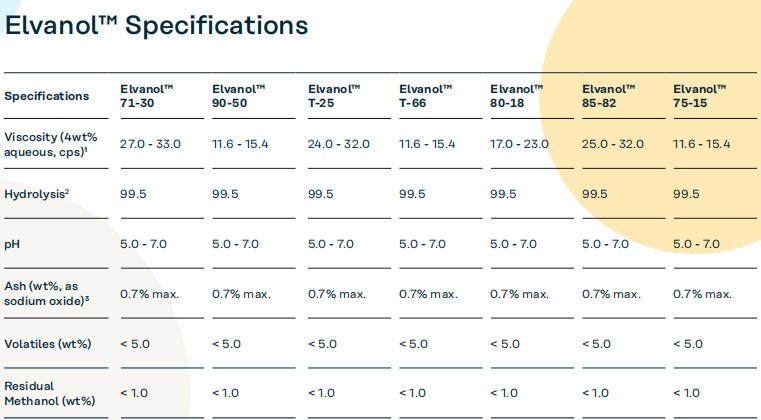
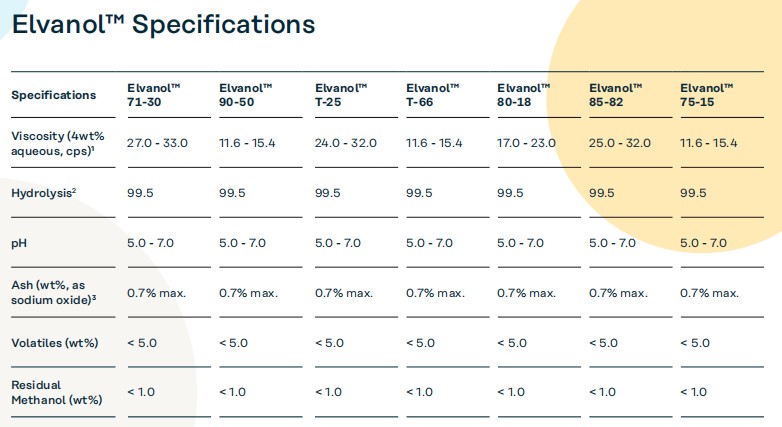
In food and industrial packaging, water and oil resistance are crucial. PVA materials have excellent water resistance, especially high-hydrolysis PVA (such as Elvanol PVOH 80-18), which can effectively isolate external moisture, thus keeping the packaging contents dry and safe. In addition, some PVA materials also exhibit good oil resistance, preventing oil penetration, making them particularly suitable for packaging oily foods.

Application example: For example, using a PVA coating in food packaging can ensure that the packaging surface is not affected by oil penetration, ensuring the quality and hygiene standards of the product. Furthermore, when used in paper-based packaging materials, PVA coatings can significantly improve the water resistance of the packaging and extend the shelf life of the products.

♠ Enhancing the Strength of Packaging Materials

In the packaging industry, the strength and durability of materials are important indicators of packaging quality. Polyvinyl alcohol (PVA), with its excellent bonding and film-forming properties, can effectively enhance the structural strength of packaging materials. Whether in paper, cardboard, or film materials, PVA can strengthen the material's tensile and tear resistance, thereby improving the overall load-bearing capacity and damage resistance of the packaging.

Application Example: Medium-viscosity PVA materials such as Elvanol 85-82 and ELVANOL 71-30 Polyvinyl Alcohol are commonly used as coatings for paper and cardboard, significantly improving the tensile and tear strength of the paper. This is particularly important for express packaging, protection during transportation, and the packaging of certain high-end products.

♠ Environmental Protection and Sustainability

With increasingly stringent environmental regulations, the packaging industry has a growing demand for biodegradable materials. PVA, as a biodegradable polymer, can degrade rapidly in the natural environment, avoiding the environmental pollution problems caused by traditional plastics. Using PVA as a packaging material not only ensures the efficiency of packaging functions but also effectively reduces environmental pollution, making it a green material that meets the requirements of sustainable development.

Application Example: For example, in the food packaging field, using PVA as a packaging coating material not only ensures the waterproof and oil-proof properties of the packaging but also reduces the negative impact on the environment. Especially in areas with high environmental requirements, the application prospects of PVA materials as biodegradable packaging are very broad.

Elvanol Specifications

3. Specific Applications of Different PVA Grades in Packaging

Elvanol 90-50

As a high-hydrolysis, low-viscosity polyvinyl alcohol, Elvanol™ 90-50 performs excellently in packaging applications requiring lower viscosity and higher film strength. It is particularly suitable for packaging materials requiring lower viscosity and higher coating efficiency, such as primers for ceiling tiles.

Elvanol 71-30

This medium-viscosity polyvinyl alcohol is widely used in paper coating and paper packaging. Its high film-forming properties and oil and water resistance make it an ideal choice for many packaging applications. Especially in the production of paper packaging and adhesives, it can significantly improve the stability and protective capabilities of packaging materials.

Elvanol T-25 and Elvanol  T-66

These two PVA grades are widely used in the textile industry, but they are also suitable for certain special packaging applications, especially in high-humidity environments, maintaining high weaving efficiency and requiring low additive levels, reducing common shedding and maintenance needs during the weaving process.


Polyvinyl alcohol (PVA), with its excellent film-forming properties, superior bonding strength, and water and oil resistance, has become an indispensable material in the packaging industry. With increasing environmental requirements, PVA, with its biodegradability and environmentally friendly characteristics, has also become a highly favored green packaging material on the market. In the future, with continuous innovation in PVA technology and the expansion of its applications, it will play an even greater role in the packaging industry, making a positive contribution to improving packaging quality and reducing environmental burden.


Website: www.elephchem.com

Whatsapp: (+)86 13851435272

E-mail: admin@elephchem.com

Analysis of PVB Applications with Different Viscosities and Structural Specifications (Part 1)

Polyvinyl butyral resin is widely used in coatings, inks, adhesives, ceramic slurries, and films due to its excellent film-forming properties, adhesion, impact resistance, and good compatibility with various materials. Different application scenarios place different requirements on the viscosity, functional group ratio, and solubility of PVB. Therefore, understanding the structural characteristics and application directions of different specifications of PVB is key to achieving stable formulations and cost control.


1. Understanding PVB: Chemical Structure Determines Physical Properties

PVB is a synthetic resin produced by the condensation reaction of polyvinyl alcohol and butyral under acid catalysis. By precisely controlling three core chemical indicators, the applications of different grades are defined:

  • Butyral content: Determines the resin's hydrophobicity and solubility in non-polar solvents.
  • Hydroxyl content: Affects the resin's polarity, adhesive strength, and reactivity with crosslinked resins.
  • Acetate content: Although present in lower amounts, it has a fine-tuning effect on the resin's softness and dissolution rate.


2. PVB Specification Classification and Viscosity Range Division

From an industrial application perspective, the core distinguishing criteria for PVB mainly focus on viscosity grade and functional group composition. The CCP PVB series can be broadly classified into three categories based on solution viscosity: low viscosity, medium viscosity, and high viscosity.

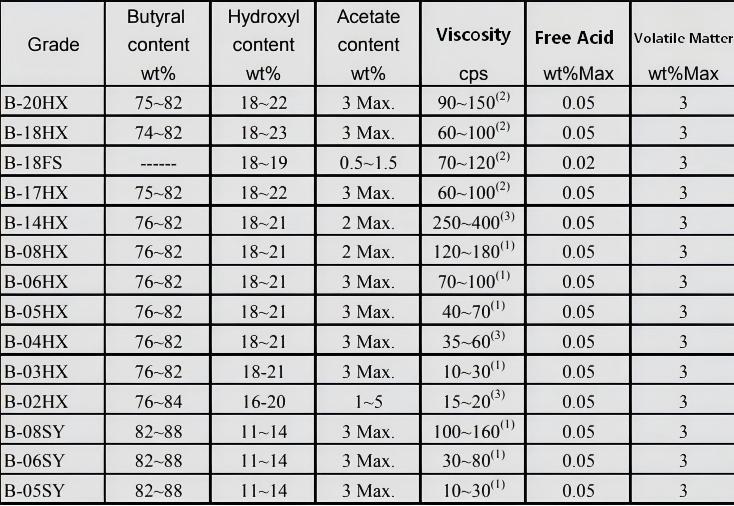
Low viscosity grades, such as PVB Resin B-02HX, PVB Resin B-03HX, PVB Resin B-04HX, PVB Resin B-05HX, and PVB Resin B-05SY, typically achieve good flowability in low-solids systems, making them suitable for systems with high workability requirements, such as spray coatings, low-viscosity inks, or high-filler dispersion systems. These products help improve pigment wetting and application uniformity while ensuring film continuity.

Medium viscosity grades (such as CCP PVB B-06HX, CCP PVB B-08HX, CCP PVB B-06SY, and CCP PVB B-08SY) achieve a good balance between flowability and structural strength, making them more suitable for general-purpose coatings, composite inks, and adhesive systems. They provide stable adhesion and mechanical strength under normal solids conditions and are frequently used in industrial formulations.

High-viscosity grades such as Changchun PVB B-14HX,Changchun PVB B-17HX,Changchun PVB B-18HX,and Changchun PVB B-20HX are suitable for applications requiring high film strength, impact resistance, or cohesiveness, such as high-performance adhesive layers, functional coatings, and structural adhesives. These products are typically used in high-solids systems, requiring relatively stricter dissolution and dispersion conditions.

Besides viscosity, the performance of PVB is also highly dependent on the ratio of butyraldehyde, hydroxyl, and acetate groups in its molecule. In the CCP PVB series, most HX-type products have a relatively balanced butyraldehyde and hydroxyl content, resulting in good solubility in various polar solvents while maintaining good adhesion and water resistance. In contrast, the SY series (such as PVB resin B-05SY, Changchun PVB B-06SY, and Changchun PVB B-08SY) are high-butyraldehyde and high-acetal-degree products. These PVBs have a lower proportion of polar hydroxyl groups in their molecular chains, thus exhibiting better compatibility in non-polar or weakly polar solvent systems, and are particularly suitable for formulations based on toluene and ester solvents. Its film-forming structure is more compact, which helps improve water resistance and chemical stability.


3. Typical Application Scenarios

In coatings and inks, low to medium viscosity HX series PVB is often used as a pigment dispersant or film-forming resin. Its good compatibility allows it to be used synergistically with a variety of resin systems, while reducing the dependence on additives in the formulation.

In the printing ink field, medium viscosity PVB achieves a better balance between adhesion, flexibility, and drying speed, making it particularly suitable for surface treatment of metal, plastic, or composite substrates.

For adhesives, high viscosity PVB or SY series products are more advantageous. Their higher cohesiveness and film strength help improve the durability and impact resistance of the final bond layer. In some formulations, different grades of PVB can also be mixed to finely adjust the system viscosity and application properties.


Website: www.elephchem.com

Whatsapp: (+)86 13851435272

E-mail: admin@elephchem.com

Analysis of PVB Applications with Different Viscosities and Structural Specifications (Part 2)

In the fields of electronic materials, metal foil processing, and high-reliability adhesives, higher requirements are placed on the heat resistance, bonding strength, and long-term stability of resin materials. Polyvinyl butyral resin, due to its good flexibility, polar functional group structure, and excellent film-forming ability, has become an important component of various functional adhesives and electronic-grade coatings. In addition to the traditional HX and SY series, the CCP series of PVB has developed high-performance modified PVB products, represented by the TX series, specifically for high-temperature applications and metal-to-metal interface bonding needs.


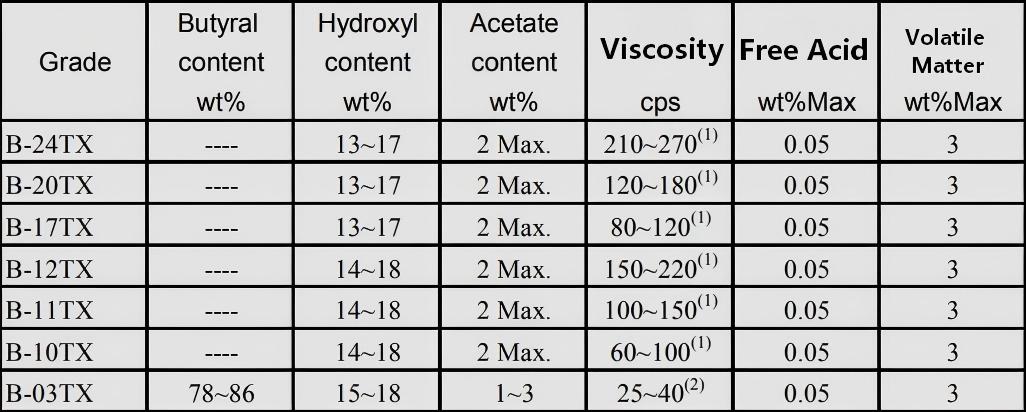
PVB Specification


1. Specification Classification and Structural Characteristics of TX Series PVB

Unlike conventional PVB, the TX series products are high-thermal-stability, high-viscosity modified PVBs. While maintaining the acetal backbone, their molecular structure significantly improves heat resistance and bonding reliability through functional group ratios and molecular weight design.

From a viscosity grade perspective, the TX series can be divided into two main categories:

  • One category is medium-to-low viscosity modified PVB, represented by PVB B-03TX, mainly used in applications requiring high application flowability and coating uniformity. These products, while maintaining basic adhesion, help reduce system viscosity, making them suitable for precision coating or thin-film applications.
  • Another type is high-viscosity and ultra-high-viscosity modified PVB, including specifications such as PVB Resin B-10TX, Changchun PVB B-11TX, PVB B-12TX, PVB B-17TX, CCP PVB B-20TX, and PVB B-24TX. These products have higher molecular weights and denser film-forming structures, maintaining stable mechanical properties and interfacial adhesion even at high temperatures, making them a core resin choice for electronic-grade and structural adhesives.


2. Analysis of High Thermal Stability and Metal Interfacial Adhesion Performance

One of the outstanding advantages of the TX series PVB is its excellent heat resistance. In electronic manufacturing and metal processing, adhesives and coating materials often undergo multiple heat treatment processes, such as baking, reflow soldering, or long-term high-temperature service environments. Ordinary resins are prone to softening, migration, or adhesion attenuation under these conditions, while the TX series PVB, through molecular structure optimization, effectively improves the glass transition temperature and thermal stability range.

Furthermore, the TX series products exhibit particularly outstanding performance in metal interfacial adhesion. The hydroxyl functional groups retained in its molecules can form stable physical or chemical interactions with metal surfaces, improving adhesion to metal materials such as copper and aluminum foil. This property makes it widely used in printed circuit board (PCB) copper foil adhesives, metal composite films, and functional coatings.

In practical formulations, high-viscosity TX series PVBs can significantly improve the cohesive strength and fatigue resistance of the adhesive layer, contributing to improved reliability and lifespan of the final product.


3. Typical Applications

In the field of electronic-grade adhesives, high-viscosity grades such as PVB B-10TX to PVB B-24TX are widely used as bonding layers between PCB copper foil and substrates. These applications not only require high initial tack but also emphasize stability under high temperature, high humidity, and long-term operating conditions. The application of TX series PVBs in this field can effectively reduce the risk of interface failure.

In metal foil composites, TX series PVBs combine good flexibility and bonding strength, adapting to the thermal expansion differences between the metal and polymer substrates, reducing delamination problems caused by thermal cycling.

For systems requiring a balance between workability and performance, different viscosity grades of the TX series can be mixed. Due to the good compatibility between various CCP PVB specifications, formulation engineers can achieve precise control over viscosity, flowability, and final properties by adjusting the proportions.

High-viscosity TX series products have relatively high requirements for solvent selection and process conditions during dissolution and dispersion. Proper control of dissolution temperature, stirring intensity, and solid content helps to fully realize their performance advantages.


Website: www.elephchem.com

Whatsapp: (+)86 13851435272

E-mail: admin@elephchem.com

Chloroprene Neoprene Latex CRL50LF Advantages in Film Formation

In the fields of waterproof coatings, impregnated products, and functional coating materials, film formation often directly determines the waterproof performance, mechanical strength, and service life of the final product. Chloroprene Neoprene Latex CRL50LF, as a typical anionic high-solids chloroprene latex, is widely used in waterproof coatings and various industrial impregnation systems due to its stable and excellent film-forming performance in practical applications.


Chloroprene Neoprene Latex CRL50LF

1. CRL50LF Film Formation Mechanism and Fundamental Advantages

CRL50LF is prepared from chloroprene monomer through a free-radical emulsion polymerization process, and the latex particles carry a stable negative charge system. This structure lays a good foundation for its film formation process.

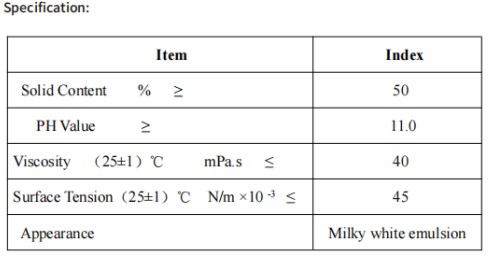
Firstly, in terms of film formation driving force, CRL50LF has a high solid content (≥50%). During coating or impregnation, as water evaporates, the latex particles can quickly approach each other and undergo close packing. When the system reaches the critical film formation concentration, the particles deform and fuse under the combined action of surface tension and molecular chain flexibility, forming a continuous and dense rubber film.

Secondly, CRL50LF crystallization resistance is particularly crucial for film integrity. Traditional chloroprene systems are prone to crystallization at low temperatures or after long-term storage, leading to discontinuous film formation or embrittlement of the film layer. CRL50LF, through formula and emulsification system optimization, effectively inhibits crystallization tendency, allowing it to form a uniform and continuous rubber film even at room temperature or slightly lower temperatures.

In addition, Polychloroprene Rubber maintains good emulsion stability under high pH conditions (pH ≥11), which is conducive to maintaining the stability of particle size distribution and rheological properties during actual construction, thereby reducing film defects such as pinholes and craters.


2. Post-Film Formation Performance: Density, Toughness, and Durability

The film-forming advantages of CRL50LF are not only reflected in its ability to form a film, but also in the comprehensive performance level after film formation.

In terms of film structure, the rubber film formed by this latex is dense and continuous, with low porosity, providing excellent water barrier properties. This characteristic allows it to maintain reliable waterproofing performance even with relatively thin coating thicknesses in waterproofing coating applications.

In terms of mechanical properties, CRL50LF forms a film with high tensile strength and good elasticity. The film is not prone to brittle fracture or permanent deformation under external forces, making it suitable for substrate surfaces subject to deformation or dynamic stress, such as flexible waterproof layers and fabric impregnation products.

At the same time, the inherent solvent resistance, chemical corrosion resistance, and weather resistance of neoprene rubber are fully reflected after film formation. The CRL50LF film is not prone to aging in outdoor environments and maintains structural stability when in contact with weak acids, weak bases, or various industrial media, providing assurance for long-term use.


3. Comprehensive Advantages of Film-Forming Properties in Application and Logistics

In practical applications, the excellent film-forming properties of CRL50LF bring significant process and cost advantages to customers. Due to high film-forming efficiency and good film uniformity, users can reduce the number of repeated coatings in waterproofing coatings or impregnation processes, thereby improving production efficiency and reducing unit cost.

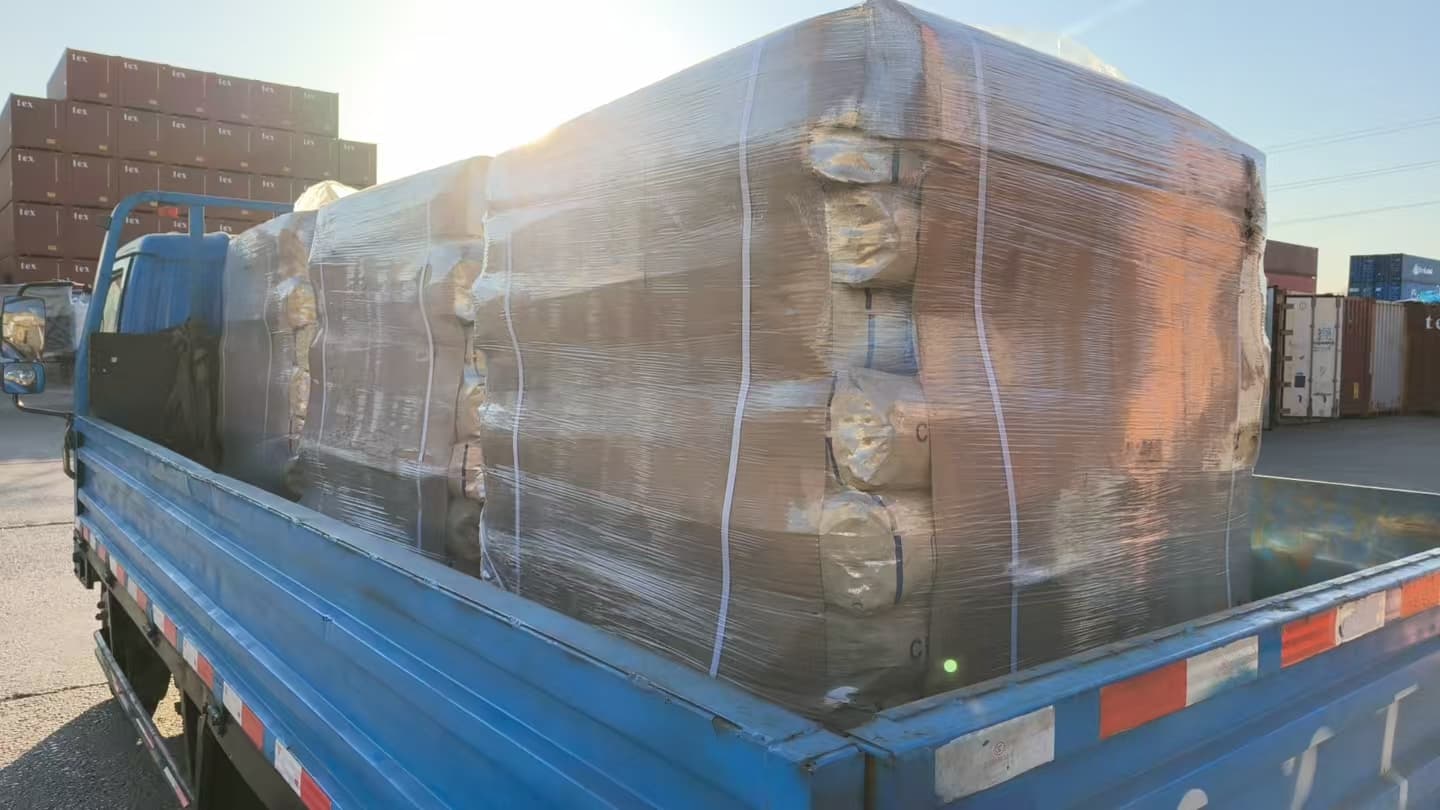
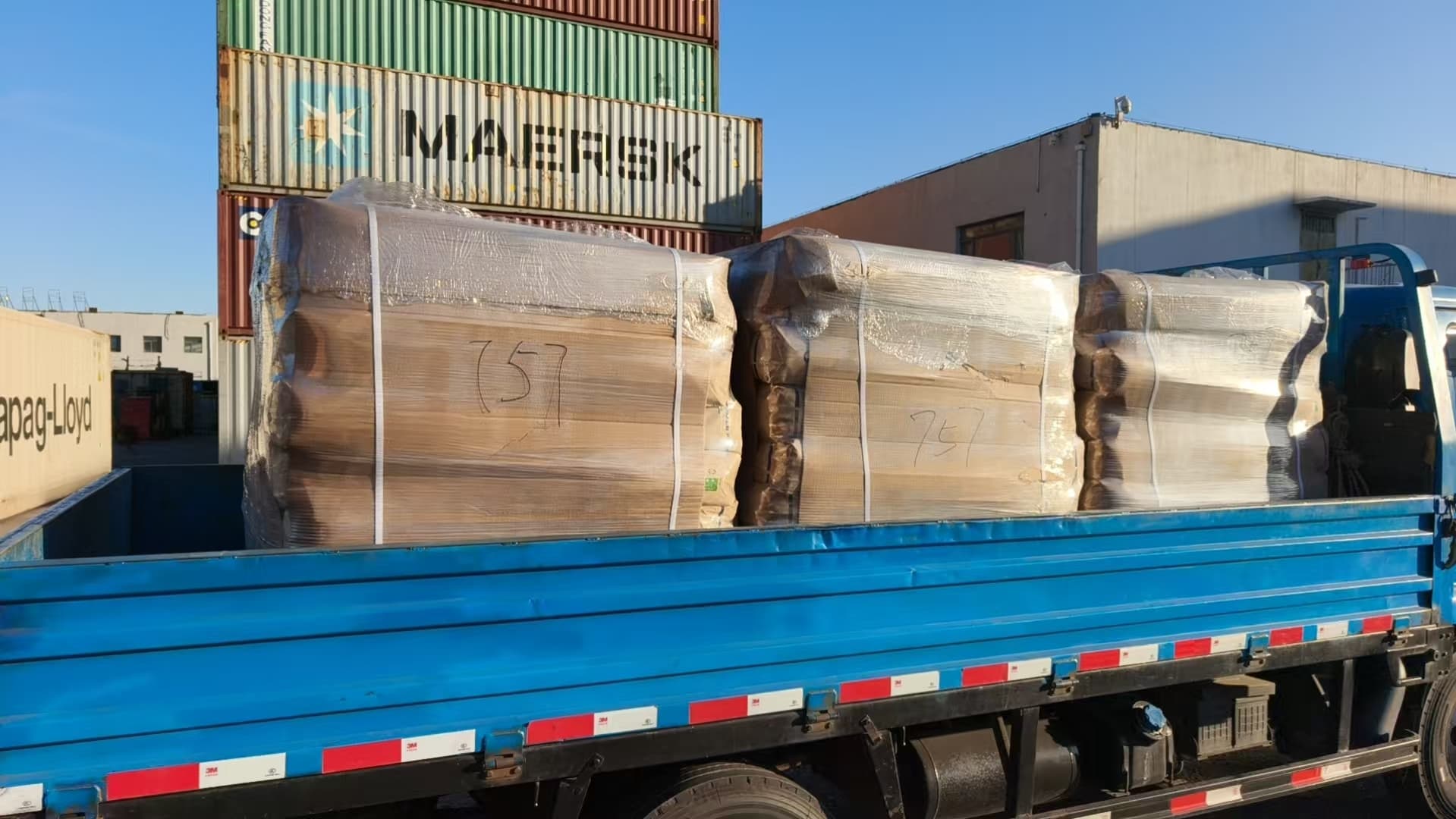
From a logistics and delivery perspective, CRL50LF is supplied in plastic drums or IBC ton containers, facilitating large-scale transportation and on-site use. Good storage stability ensures that the product is not prone to sedimentation or performance fluctuations during transportation and storage, indirectly guaranteeing the consistency of its film-forming performance in end applications.


In summary, Chloroprene Latex CRL50LF combines multiple advantages in film-forming properties, including easy film formation, dense film structure, excellent mechanical properties, and strong long-term stability. These characteristics make it highly applicable and valuable in the field of waterproof coatings and impregnation products. For industrial customers pursuing stable quality and sustainable production, CRL50LF is not only a raw material choice but also a solution that can improve overall product performance and process reliability.


Website: www.elephchem.com

Whatsapp: (+)86 13851435272

E-mail: admin@elephchem.com

Comparison of Grafting Performance between CR244 and CR248

In the research and development and production of high-performance industrial adhesives, chloroprene rubber has consistently held a core position due to its excellent adhesion, aging resistance, and flame retardancy. However, with the increasing demand for synthetic materials (such as PVC, PU, and EVA) in modern industry, traditional adhesives face challenges such as poor wettability and mismatched polarity.

Among the many types of chloroprene rubber, Polychloroprene Rubber CR244 and Adhesive Type CR248 Chloroprene Rubber are two of the most representative products. Although they share many similarities in their basic physical properties, the differences in the critical dimension of "grafting performance" determine their ultimate performance in different industrial scenarios.


1. CR244: The Cornerstone of Rapid Crystallization and High Cohesive Strength

CR244 type chloroprene rubber is polymerized using diisopropyl xanthate disulfide or dodecyl mercaptan as a regulator, possessing extremely significant physical characteristics.


♣ Physical Characteristics and Performance Advantages

CR244's most prominent technical feature is its rapid crystallization. This characteristic allows the adhesive to quickly establish initial strength after application, greatly shortening the waiting time for industrial assembly. Its regular molecular structure gives the adhesive layer extremely high cohesive strength. At room temperature, the adhesive strength exhibited by CR244 is sufficient to meet the needs of most porous materials.

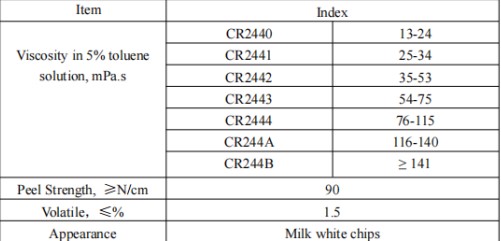
Its appearance is off-white or beige flakes, with a stable density of around 1.23. In terms of technical indicators, CR244 offers a very finely divided viscosity range. From the ultra-low viscosity CR2440 (13-24 mPa.s, 5% toluene solution) to the high-viscosity CR244B (above 140 mPa.s), this wide viscosity coverage allows adhesive manufacturers to precisely adjust the formulation solid content according to the needs of brushing, spraying, or scraping processes.

♣ Applications in Traditional Fields

Due to its peel strength typically maintained above 90 N/cm, CR244 is widely used in the self-adhesion and mutual adhesion of traditional materials such as rubber, leather, fibers, wood, and cement products. It is comparable in performance to top-tier international models, such as Denka's A series (such as Denka Chloroprene A-100) and DuPont's AD series (such as Neoprene AD-20), and is the preferred base material for producing high-quality general-purpose neoprene adhesives.


2. CR248: A Breakthrough in Polarity Achieved Through Graft Modification

If CR244 represents a general-purpose base material, then CR248 is an advanced version designed to address the challenges of bonding "difficult-to-bond materials." The fundamental difference between it and CR244 lies in the plasticity and grafting properties of its molecular chain.


♣ Core Technology: Grafting and Copolymerization

While CR248 retains the basic performance advantages of CR244, it has active sites reserved during the molecular design stage. This allows CR248 to undergo monomer grafting copolymerization with active monomers such as methyl methacrylate (MMA) and acrylic acid (BA) through chemical means.

The significance of this graft modification is that by introducing polar monomer side chains onto the non-polar main chain of neoprene rubber, the surface energy and polarity of the adhesive are significantly improved. This not only improves the wettability of the adhesive on polar substrates but also enhances the bonding force at the interface through chemical bonding.

♣ Professional Performance for Synthetic Materials

In modern footwear, automotive interiors, and luggage industries, synthetic materials such as PVC (polyvinyl chloride), PU (polyurethane), and EVA (ethylene-vinyl acetate copolymer) are widely used. Due to the high surface polarity or the presence of plasticizers in these materials, traditional CR244 adhesives often experience delamination.

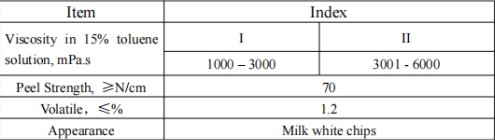
CR248 is optimized precisely for this purpose. The modified CR248 adhesive can establish a stable bridging relationship with these synthetic materials. Although its nominal peel strength (approximately 70 N/cm) is slightly lower than that of CR244, its actual bonding stability and plasticizer resistance on specific polar materials far exceed the latter.


3. In-depth Comparison of Technical Parameters of CR244 and CR248

Differences in viscosity control: CR244 tends to exhibit its viscosity gradient at lower concentrations (5% toluene solution), which is more conducive to producing highly permeable primers. CR248's technical specifications are typically based on a 15% toluene solution, and it is divided into Type I (1000-3000 mPa.s) and Type II (3001-6000 mPa.s). This means that under the same viscosity requirements, CR248 can support formulations with higher solid content, thereby reducing the environmental impact of solvent evaporation and increasing the dry film thickness per application.


Volatile content and purity: Both products exhibit excellent purity control, with volatile content strictly controlled to below 1.5% (CR248 is further optimized to 1.2%). This ensures that the adhesive does not produce excessive bubbles during the drying process, guaranteeing the density and aging resistance of the adhesive layer.


Storage stability: Both products perform similarly in terms of storage requirements. They can be stored for one year at temperatures below 20°C, while in summer environments at 30°C, it is recommended to use them within six months. For manufacturers, strict temperature control is crucial to maintaining the activity of chloroprene rubber and preventing premature self-polymerization.


4. How to choose the right product based on your needs?

If the substrate is natural rubber, genuine leather, or wood products: CR244 is the preferred choice. It provides faster initial tack and higher ultimate cohesive strength, and the formulation cost is relatively more advantageous. For products requiring precise rheological control, its wide range of viscosity grades can be used for blending.

If modern synthetic materials such as PVC, PU, ​​and EVA are involved: CR248 is the ideal choice. Especially when your adhesive needs to be modified with MMA to produce "universal grafting adhesive," the grafting active sites provided by CR248 ensure the efficient progress of the chemical reaction, resulting in finished adhesives with excellent migration resistance and cross-material bonding capabilities.

Considering environmental protection and cost: CR248's high solid content characteristics help develop low-VOC adhesives that meet environmental standards. Although the unit price of the raw material may be slightly higher than CR244, its low rework rate and high-performance characteristics on difficult-to-bond materials often result in lower overall industrial costs.


Website: www.elephchem.com

Whatsapp: (+)86 13851435272

E-mail: admin@elephchem.com

How Elvanol PVA Simultaneously Improves Weaving Efficiency and Finished Product Quality

In the textile industry, the sizing process directly determines weaving efficiency, yarn breakage rate, and the stability of subsequent processing. With the widespread adoption of high-speed looms, shuttleless looms, and environmental regulations, traditional sizing systems are gradually revealing limitations in terms of operability, recyclability, and overall cost. Due to its excellent film-forming properties, adhesion, and recyclability, Polyvinyl Alcohol (PVA) has long been a core material in textile sizing systems.

1. Core Performance Requirements of PVA in Textile Sizing

In the textile sizing process, the role of the sizing agent is not only to increase yarn strength but, more importantly, to maintain stable operation under high-speed weaving conditions. Ideal PVA sizing agents typically need to meet the following key requirements:

  • Good film strength and flexibility: Forming a uniform and continuous protective film to reduce yarn fuzz and improve abrasion resistance.
  • Moderate solution viscosity: Maintaining good fluidity even at high solid content, adapting to high-speed sizing.
  • Easy desizing: Effectively removable at lower temperatures and water consumption during the finishing stage.
  • Low foaming and low corrosiveness: Reducing equipment maintenance frequency and improving continuous production stability.

Elvanol series of PVA (such as Elvanol 75-15 Polyvinyl Alcohol) , through optimization of molecular structure and viscosity grades, allows different models to precisely match the above requirements.

2. Practical Advantages of Elvanol T Series in High-Speed ​​Weaving

In textile applications, PVA Elvanol T-25 and Elvanol T-66 are typical PVA grades specifically developed for sizing processe.

Elvanol T-25

This product is a low-foaming copolymer polyvinyl alcohol, widely used for warp sizing of polyester-cotton blended yarns and other short-staple yarns. Its main advantages include:

Maintaining good weaving performance even in low-humidity environments, reducing downtime.

When compounded with starch, it can significantly reduce the overall sizing amount, reducing loom shedding.

Not prone to mildew and non-corrosive, facilitating long-term stable operation of equipment.

Can be desized directly with hot water, without relying on enzyme preparations, reducing operating costs.

In actual factory applications, T-25 is often used in traditional sizing systems that prioritize stability and versatility.

Elvanol T-66

Compared to T-25, T-66 has a lower solution viscosity and is specifically designed for medium-to-high pressure sizing machines and high-speed shuttleless looms:

It maintains good fluidity even at high solid content, suitable for high-speed sizing.

It offers excellent yarn separation, enabling a "100% PVA" formulation to improve weaving efficiency.

It is easier to desize, allowing for effective cleaning at lower temperatures and water flow rates.

The low viscosity of the recovered sizing solution facilitates the operation of ultrafiltration recovery systems.

For modern textile enterprises pursuing high productivity and high recovery rates, T-66 offers significant advantages in overall cost control.


3. The Value of PVA in Desizing and Sustainable Production

With increasingly stringent environmental regulations, the recyclability of sizing agents and wastewater load have become important considerations for textile companies. Compared to some natural or modified starch sizing agents, PVA offers advantages in the following aspects:

  • Low BOD/COD characteristics: Helps reduce wastewater treatment pressure.
  • Recyclable and reusable: PVA recovered through ultrafiltration systems can be reused for sizing.
  • Stable solution performance: The recovered sizing solution has low viscosity and is easy to pump, facilitating continuous production.


Elvanol series of PVA was designed with industrial recycling and reuse scenarios in mind, ensuring that it not only meets process performance requirements but also aligns with the long-term goals of water conservation, emission reduction, and cost reduction in the textile industry. The Elvanol series of polyvinyl alcohol provides reliable options for different types of looms and yarn systems through its differentiated viscosity design, excellent film-forming properties, and good desizing and recycling characteristics. Choosing the appropriate PVA grade can not only improve weaving efficiency but also significantly reduce overall costs in the long run.


Website: www.elephchem.com

Whatsapp: (+)86 13851435272

E-mail: admin@elephchem.com

What Makes Phenolic Resin a Top Engineering Choice?

Compared to thermoplastic resins, thermosetting resins are fewer in type and quantity, and often play a "supporting" role. The first synthetic resin ever manufactured by humans was called phenolic resin. Phenolic resin is a thermosetting resin with good balanced properties and is currently sold in the form of laminates (where the resin and base material are interwoven). Phenolic resin continues to play an active role in advanced materials and other unique fields, and can be said to be a resin that influences and supports our daily lives.


Bakelite


1. What is Phenolic Resin?

Overview of  Phenolic formaldehyde resin

Bakelite is a thermosetting resin known as phenolic resin (Bakelite Phenolic Resin). In industrial applications, it is a thermosetting sheet material applied to paper and fabric. It is also used in adhesives, coatings, electrical insulation materials, and other applications. Its raw materials are phenol and formaldehyde. By mixing these raw materials with acidic or alkaline catalysts and necessary curing agents and heating them, phenolic resin with a three-dimensional network structure can be produced. As a relatively inexpensive thermosetting resin, phenolic resin has excellent heat resistance, strength, and electrical insulation properties, and has been applied to various fields to date. With the emergence of thermoplastic resins, its application areas have gradually changed, but it continues to evolve in its own way to meet new market demands. To this day, various applications are still being developed to fully utilize the unique properties of phenolic resin, and its application areas are expected to continue to expand.


History of Phenolic Resin Development

Phenolic resin was discovered in 1872 by a German chemist during research on phenolic dyes; in 1907, a Belgian-American chemist patented the manufacturing method. In 1910, Baekeland established a phenolic resin company to achieve industrial production of phenolic resin and named the product "Bakelite" after himself. This name is still used today.


Types of Phenolic Resin

Currently, phenolic resin is generally not circulated as the resin itself, but in the form of laminates made by mixing the resin with a base material (paper or fabric). The manufacturing method involves coating each substrate with resin and then curing it through heat treatment. Laminates with paper as the base material are called "bakelite paper," and those with cloth as the base material are called "bakelite cloth." The characteristics of each product are as follows:

  • Phenolic Paper

Phenolic paper is a product made by interweaving phenolic resin with paper. It is cheaper (approximately half the price) and lighter than phenolic cloth. Phenolic paper is recommended for electrical insulation applications. However, it should be noted that since the base material is paper, it has high water absorption.

  • Phenolic Cloth

This is a phenolic resin with cloth as the base material. Compared to phenolic paper, it has superior mechanical properties and is therefore often used in applications requiring high strength. On the other hand, like phenolic paper, this base material also has high water absorption, so it must be used in environments with low moisture content.


2. Characteristics of Phenolic Resin

Advantages of Phenolic Resin

  • High Heat Resistance

Phenolic resin is a thermosetting resin, which means it has strong heat resistance. It can withstand temperatures up to 150-180°C and maintain its strength even under high-temperature conditions.

  • Excellent Electrical Insulation Performance

Phenolic resin has high electrical insulation performance, so it is used as an insulating material in printed circuit boards, circuit breakers, and switchboard coatings.

  • High Mechanical Strength

High mechanical strength is also a major advantage of phenolic resin. In particular, phenolic cloth has higher strength than phenolic paper, so phenolic cloth is often used in applications requiring impact resistance. However, it should be noted that the strength is affected by the fiber direction in the base material (paper and cloth).

  • Suitable for Injection Molding

When processing phenolic resin as a resin monomer, it can be processed using the same injection molding method as thermoplastic resins. The phenolic resin is heated to a temperature that does not cause hardening (approximately 50°C), then injected into a mold, and then heated to 150-180°C to cure it.


Disadvantages of Phenolic Resin

  • Difficult to Recycle

Phenolic resin is a thermosetting resin, and once cured and molded, it cannot be remolded, making recycling difficult. Currently, companies such as Sumitomo Bakelite Co., Ltd. are advancing research on the recycling and reuse of phenolic resins.

  • High water absorption

Phenolic resins sold in laminate form contain paper or cloth as a base material. Therefore, they have high water absorption and are not suitable for use in wet environments or environments with high humidity.

  • Low weather resistance and susceptibility to alkaline solvents

Phenolic resins are sensitive to ultraviolet radiation and must be used with caution outdoors. In addition, phenolic resins are easily soluble in alkaline substances.


3. Main Uses of Phenolic Resins

Since its industrial production began in 1907, phenolic resin has been widely used in everyday products around us, such as tableware, kitchenware, buttons, clocks, and clothing accessories. However, with the invention of various thermoplastic resins such as nylon and fluororesins, some applications of phenolic resin have been replaced by thermoplastic resins due to considerations of moldability and cost. Nowadays, the direct molding and processing of phenolic resin itself is gradually decreasing. However, phenolic resin still has a wide range of applications due to its unique properties. For example, phenolic resin, leveraging its excellent electrical insulation properties, is used in printed circuit boards, distribution panels, and circuit breakers. Printed circuit boards are not only essential materials for IT equipment such as personal computers and tablet computers, but also indispensable components in modern electrical products. Therefore, it is no exaggeration to say that phenolic resin can be applied to all areas of electricity use. In addition, it can be used as an adhesive, shell molding material, and coating. For example, phenolic resin is used as an adhesive in sand molds for casting and materials for 3D printers. Furthermore, its solubility in alkaline substances and its ability to absorb light at wavelengths of 200-300 nm make it suitable for use as a photoresist material. It is also widely used as a high-performance material in other fields, such as metal replacement parts, negative electrode materials for lithium-ion batteries, and activated carbon raw materials in the pharmaceutical industry. In 2010, the space capsule that returned samples from the asteroid "Itokawa" also used phenolic resin as a heat insulation material.


Phenolic resin, also known as Bakelite, was the world's first synthetic resin, developed over 100 years ago. It is a relatively inexpensive thermosetting resin with excellent heat resistance, strength, and electrical insulation properties, and offers a balanced performance profile. It is generally not marketed as the resin itself, but rather in the form of laminates made by mixing the resin with a base material (paper or cloth). Advantages of phenolic resin include excellent heat resistance and electrical insulation, high strength, and processability through injection molding. On the other hand, phenolic resin also has disadvantages such as difficulty in recycling, high water absorption, and susceptibility to ultraviolet radiation. Currently, phenolic resin is widely used in various fields, including printed circuit boards, switchboards, adhesives, coatings, photoresist materials, and negative electrode materials for lithium-ion batteries. Further advancements in its application areas are expected in the future.


Website: www.elephchem.com

Whatsapp: (+)86 13851435272

E-mail: admin@elephchem.com