```html
Choosing the right aluminum truss is an important decision for event organizers, stage contractors, rental companies, exhibition builders, and AV equipment suppliers. A suitable truss system needs to support the required equipment, fit the installation environment, and provide reliable performance throughout repeated use.
However, buying aluminum truss involves more than comparing dimensions and prices. Material grade, structural design, load capacity, connection methods, manufacturing quality, and supplier experience all influence the final purchasing decision.
So, what factors should you consider when buying aluminum truss? This guide explains the key points to evaluate before placing an order, helping you select a truss solution that matches your project requirements. GF-Truss provides aluminum truss products and customized structural solutions for concerts, exhibitions, stage productions, and LED screen installations.
Key Takeaways
- Determine the actual load requirements and unsupported span before selecting truss dimensions.
- Check aluminum alloy grades, tube thickness, and structural specifications.
- Choose between spigot truss and bolt truss based on installation and project requirements.
- Verify connection compatibility, welding quality, and relevant load test documentation.
- Compare manufacturers based on customization, production capabilities, and after-sales support.
Understand Your Project Requirements First
Before contacting an aluminum truss supplier, identify how the structure will be used. Different applications require different structural configurations, dimensions, and load-bearing capabilities.
For example, a small exhibition booth may only need a lightweight aluminum framework for decorative lighting and banners. A concert stage, on the other hand, may require a heavy-duty truss system to support moving lights, LED screens, speakers, and overhead equipment.
Common aluminum truss applications include:
- Concerts and live events: Supporting stage lighting, speakers, and overhead rigging equipment.
- Exhibitions and trade shows: Creating display frames, entrance structures, and promotional booths.
- LED screen installations: Providing structural support for large-format video walls and display panels.
- Outdoor events: Building temporary stage roofs, lighting towers, and event structures.
- Entertainment venues: Creating modular structures for theaters, studios, and performance spaces.
GF-Truss supplies different aluminum truss solutions for professional event applications. Defining your application in advance makes it easier to identify the appropriate truss type and structural configuration.
Check Aluminum Alloy Grade and Material Quality
The aluminum alloy used in a truss directly affects its mechanical properties, durability, and structural performance. When comparing products, do not focus only on whether the manufacturer describes the material as high-strength aluminum. Ask for the specific alloy grade and supporting material information.
Aluminum alloys such as 6061-T6 and 6082-T6 are commonly used in professional aluminum truss manufacturing. Both are heat-treated structural alloys, but their mechanical properties and suitability should be evaluated according to the applicable design requirements.
Important material details to confirm include:
- Aluminum alloy grade and temper condition.
- Main tube, secondary tube, and diagonal brace dimensions.
- Tube wall thickness and dimensional tolerances.
- Material traceability and quality inspection records.
- Corrosion resistance and surface finishing requirements.
For example, GF-Truss offers aluminum truss models using 6061-T6 and 6082-T6 alloy options. The 290x290mm Aluminum Spigot Box Truss is designed with a 50mm main tube and 20mm secondary and brace tubes, with specified wall thicknesses depending on the component.
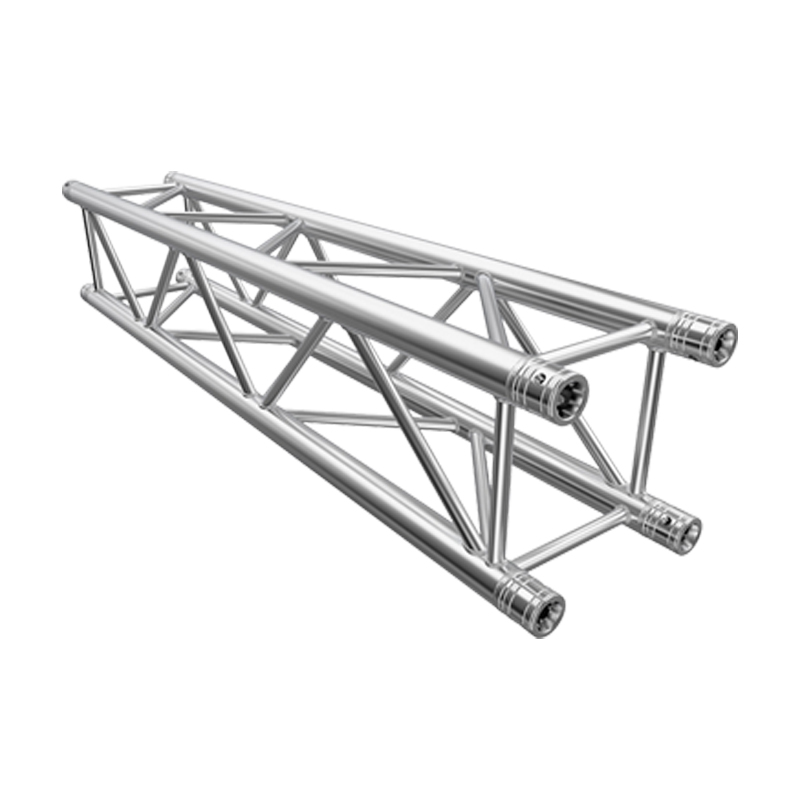
Material specifications should always be reviewed together with structural calculations and load test documentation. A higher alloy grade alone does not automatically mean that one truss can carry more weight than another.
Evaluate Load Capacity and Span Requirements
Load capacity is one of the most important considerations when buying aluminum truss. The structure must safely support the intended equipment under the actual installation conditions.
However, there is no single load capacity that applies to every aluminum truss. Its performance depends on several interacting factors, including:
- Span length: Longer unsupported spans generally result in greater bending and deflection.
- Truss dimensions: The overall cross-sectional size and structural configuration influence stiffness and strength.
- Applied loads: Point loads, distributed loads, and dynamic loads create different structural demands.
- Support conditions: The position and type of supports affect the load distribution.
- Connection strength: Joint design and connection quality influence the performance of the complete structure.
- Bracing configuration: Brace arrangement and tube dimensions contribute to structural stability.
For example, a truss supporting several lighting fixtures may experience different loading conditions from one carrying a large LED screen. Buyers should provide the equipment weight, lifting positions, span, and support arrangement to the manufacturer for evaluation.
GF-Truss offers larger structural options such as the 520x760mm High Load Capacity Aluminum Spigot Truss, which is designed for demanding applications involving large LED displays, lighting, and sound equipment.
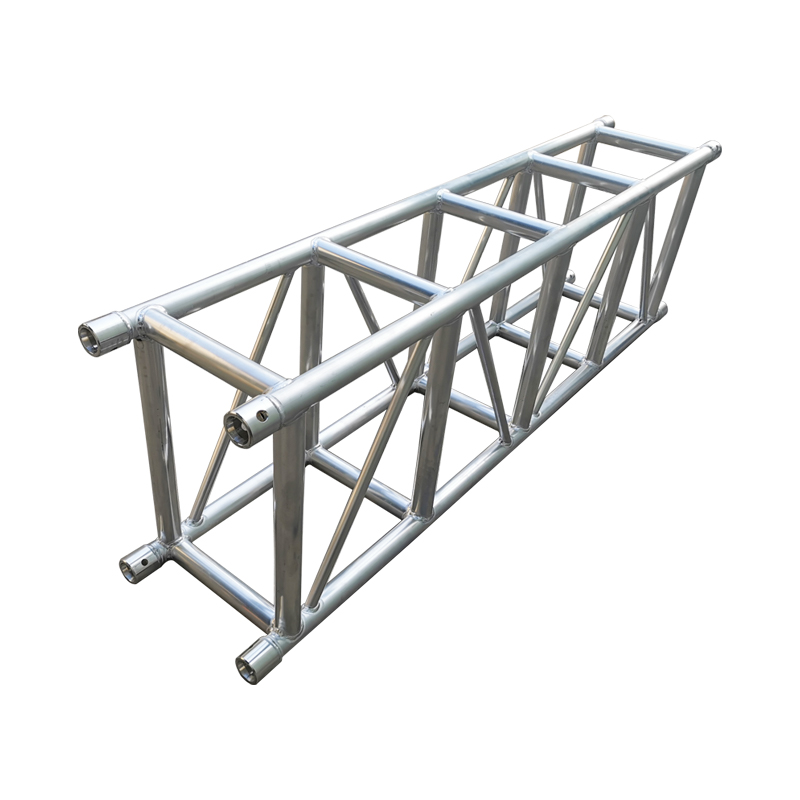
Before purchasing, request load tables or engineering calculations that match your exact truss model, span, loading arrangement, and support conditions. Never use a maximum load figure without checking the conditions under which it was established.
Choose the Right Aluminum Truss Type
Aluminum trusses are available in different structural designs. The right option depends on the required strength, assembly method, installation environment, and intended application.
Spigot Truss
Spigot trusses use connecting pins and R-clips to join individual sections. This connection method supports relatively quick assembly and dismantling, making it practical for touring events, temporary stages, exhibitions, and rental applications.
For buyers who frequently transport and assemble their equipment, the aluminum spigot truss range is worth considering.
Bolt Truss
Bolt trusses use bolted connection plates to join sections together. They are suitable for projects that require a specific connection configuration and secure mechanical fastening. Buyers should also consider assembly time, required tools, and compatibility between connecting components.
Aluminum box trusses are another important option for stage and event structures. Their four-sided framework provides a practical structural configuration for many lighting, display, and support applications.
Custom-Shaped Truss
Some projects require circular, curved, triangular, or other non-standard structures. In these situations, custom-shaped aluminum trusses can help achieve the required layout while maintaining compatibility with the overall structural design.
When selecting a truss type, consider not only its appearance but also the connection system, structural requirements, transportation conditions, and installation method.
Compare Connection Methods and Compatibility
A good aluminum truss system should be easy to assemble while maintaining reliable connections between individual sections. Connection quality is particularly important for structures that are assembled and dismantled frequently.
When evaluating a supplier, check the following details:
- Whether pins, R-clips, bolts, or other connection components are included.
- Whether connecting parts fit accurately without excessive gaps or movement.
- Whether different truss sections are compatible with existing equipment.
- Whether replacement connectors and accessories are available.
- Whether the manufacturer can provide assembly drawings and installation instructions.
For rental companies and event production teams, compatibility is especially important. Purchasing a new truss section that cannot connect properly with existing equipment may create additional costs and operational difficulties.
If you are expanding an existing system, provide the supplier with photographs, measurements, connection details, and model information before confirming the order.
Inspect Welding Quality and Manufacturing Processes
Even when the material and structural design are appropriate, inconsistent manufacturing can affect the final product. Welding quality, dimensional accuracy, and component alignment all deserve attention when comparing aluminum truss manufacturers.
A professional manufacturing process should include several important stages:
- Material inspection: Checking the alloy grade, dimensions, and condition of incoming aluminum tubes.
- Precision cutting: Preparing components according to approved technical drawings.
- CNC machining: Processing connection parts and ensuring dimensional consistency.
- Welding: Controlling welding procedures, joint quality, and structural alignment.
- Final inspection: Checking dimensions, appearance, connections, and relevant quality requirements.
Buyers should ask whether the manufacturer has documented production procedures and qualified personnel for welding and quality inspection.
GF-Truss combines CNC machining and controlled welding processes in its aluminum truss production. Its manufacturing and quality management capabilities are supported by EN 1090-2, EN 1090-3, and EN ISO 3834-related certifications. Buyers can also review the company's manufacturing capabilities and aluminum truss solutions before making a purchasing decision.
Consider Indoor and Outdoor Installation Conditions
The installation environment can influence the selection of aluminum truss. Indoor and outdoor projects may have different requirements for surface treatment, weather exposure, structural support, and installation planning.
For indoor applications such as exhibitions, theaters, and conference venues, buyers may prioritize appearance, modularity, installation efficiency, and transportation convenience.
Outdoor applications require additional consideration. Wind pressure, rain, temperature changes, ground conditions, and environmental exposure may affect the overall structure and its supporting components.
For outdoor stages and roof structures, a professional engineering assessment should consider wind loads, anchoring arrangements, ballast requirements, and local safety regulations. Aluminum's corrosion resistance does not eliminate the need for proper inspection and maintenance.
If your project involves a complete outdoor stage or roof structure rather than individual truss beams, consider a professionally designed aluminum truss system that accounts for the complete installation conditions.
Verify Certifications and Load Test Documentation
For professional event structures, supplier documentation is an important part of the purchasing process. Buyers should not rely entirely on product descriptions or verbal statements about load-bearing performance.
Before placing an order, request relevant documents such as:
- Material specifications and alloy information.
- Structural drawings and product dimensions.
- Load test reports for the corresponding truss model.
- Welding quality and production control documentation.
- Applicable manufacturing and structural certifications.
For example, GF-Truss provides TÜV load-bearing test documentation for selected aluminum truss products, including its 290x290mm spigot truss. Its product testing information describes specific test configurations and loading conditions.
When reviewing a test report, check whether the tested product matches the model you intend to purchase. Pay attention to the span, loading positions, test method, and reported results. A test result for one truss configuration should not automatically be applied to another size or installation arrangement.
For LED display projects, buyers may also need an integrated support structure rather than individual truss beams. GF-Truss offers LED wall support solutions for different display layouts and installation requirements.
Evaluate Customization and Project Support
Standard aluminum truss sizes can meet many common event requirements, but not every project follows a standard layout. Custom dimensions, colors, shapes, connection arrangements, and complete structural configurations may be necessary for specialized applications.
Before selecting a manufacturer, find out whether it can provide:
- Customized truss dimensions and section lengths.
- Special-shaped structures and curved configurations.
- CAD drawings and three-dimensional design support.
- Custom surface finishes and color options.
- Pre-assembly or trial assembly before delivery.
- Installation guidance and technical assistance.
GF-Truss provides customized aluminum truss solutions and technical design support. Its team can develop CAD drawings according to project requirements and discuss structural details before production. For more complex event installations, this type of communication helps reduce misunderstandings between the buyer, designer, and manufacturer.
When requesting a quotation, provide your project drawings, required dimensions, equipment list, installation location, and expected delivery schedule. The more complete the initial information, the easier it is for the manufacturer to recommend a suitable solution.
Compare Total Purchasing Cost Instead of Unit Price
Price is naturally an important factor when buying aluminum truss, but the lowest quotation does not always represent the best purchasing decision.
Two trusses with similar external dimensions may have different alloy grades, tube thicknesses, welding quality, connection designs, and manufacturing standards. These differences can influence durability, structural performance, and long-term maintenance costs.
When comparing quotations, consider the complete purchasing cost:
- Base price of the aluminum truss sections.
- Connection pins, bolts, accessories, and additional components.
- Customized design and engineering costs.
- Packaging, shipping, and import-related expenses.
- Installation, maintenance, and replacement requirements.
It is also useful to compare the manufacturer's production capacity, delivery reliability, communication efficiency, and technical support. For event rental businesses and long-term project contractors, these factors can have a significant impact on the overall purchasing experience.
What Information Should You Prepare Before Requesting a Quote?
Providing clear project information helps an aluminum truss manufacturer evaluate your requirements and prepare a more accurate quotation.
Before contacting a supplier, try to prepare the following details:
| Information | What to Provide |
|---|---|
| Application | Concert, exhibition, LED display, or stage construction |
| Dimensions | Truss section size, length, span, and overall structure dimensions |
| Load requirements | Equipment weight, load positions, and expected loading conditions |
| Connection type | Spigot, bolt, or compatibility with existing truss sections |
| Installation environment | Indoor, outdoor, temporary, or permanent installation |
| Quantity | Required sections, accessories, and complete systems |
| Delivery requirements | Destination, expected delivery date, and packaging requirements |
With these details, the supplier can better understand your project and recommend an appropriate aluminum truss configuration instead of simply quoting a standard product.
Why Choose GF-Truss for Aluminum Truss Solutions?
Choosing a reliable aluminum truss manufacturer is just as important as selecting the right product. A supplier with engineering knowledge, manufacturing capabilities, and project experience can help buyers avoid unnecessary purchasing risks.
GF-Truss, operated by Guangzhou Guofeng Stage Equipment Co., Ltd., specializes in aluminum truss manufacturing, customized stage structures, and LED wall support solutions.
Its capabilities include:
- A broad product range covering spigot truss, bolt truss, and custom-shaped truss.
- Aluminum truss dimensions and configurations for different event applications.
- CAD design and customized structural solutions.
- CNC machining and controlled manufacturing processes.
- Relevant EN 1090 and EN ISO 3834 certification documentation.
- Selected products supported by TÜV load-bearing test reports.
- Technical communication, test assembly, and installation guidance.
Whether you are purchasing individual truss sections for an existing inventory or developing a complete stage and LED display structure, GF-Truss can help evaluate your requirements and provide a suitable solution.
If you are planning an upcoming event project, contact the GF-Truss team with your drawings, dimensions, and load requirements to discuss the appropriate aluminum truss configuration.
Frequently Asked Questions About Buying Aluminum Truss
What should I check first when buying aluminum truss?
Start with the application, required span, equipment weight, and loading arrangement. Then compare alloy grade, tube thickness, structural dimensions, connection methods, and load test documentation. These details help determine whether the truss is suitable for your project.
Which aluminum alloy is commonly used for stage trusses?
6061-T6 and 6082-T6 are commonly used aluminum alloy options for professional truss manufacturing. The appropriate grade depends on the structural design, required mechanical properties, and applicable engineering standards.
What is the difference between spigot truss and bolt truss?
Spigot trusses use pins and R-clips for relatively quick assembly and dismantling. Bolt trusses use bolted connection plates and are suitable for projects requiring specific mechanical connection configurations. The right choice depends on installation frequency, structural design, and project requirements.
How do I determine the load capacity of an aluminum truss?
Load capacity must be evaluated according to truss dimensions, span length, alloy grade, tube thickness, support conditions, and load distribution. Buyers should request engineering calculations or load tables for the exact configuration instead of relying on a general weight rating.
Can aluminum truss be customized?
Yes. Professional manufacturers such as GF-Truss can provide customized dimensions, lengths, colors, shapes, and structural configurations. CAD drawings and project specifications can be used to confirm the design before production.
Is aluminum truss suitable for outdoor events?
Yes, aluminum truss is widely used in outdoor event structures. However, outdoor installations must account for wind loads, rain exposure, ground conditions, anchoring, and applicable safety requirements. A qualified structural assessment is essential for the complete installation.
Why should I request a load test report before purchasing?
A load test report provides information about how a particular truss configuration performed under specified testing conditions. It helps buyers verify product performance, but the report must match the actual model, span, loading arrangement, and installation conditions.
What information do I need to request an aluminum truss quotation?
Prepare the intended application, truss dimensions, required quantity, span, equipment weight, loading positions, connection type, installation environment, and delivery destination. Drawings or reference photographs are also helpful for customized projects.
Looking for the Right Aluminum Truss for Your Project?
GF-Truss provides professional aluminum truss products and customized structural solutions for concerts, exhibitions, stage lighting, and LED display installations. Contact our team to discuss your project specifications and receive a suitable quotation.
```