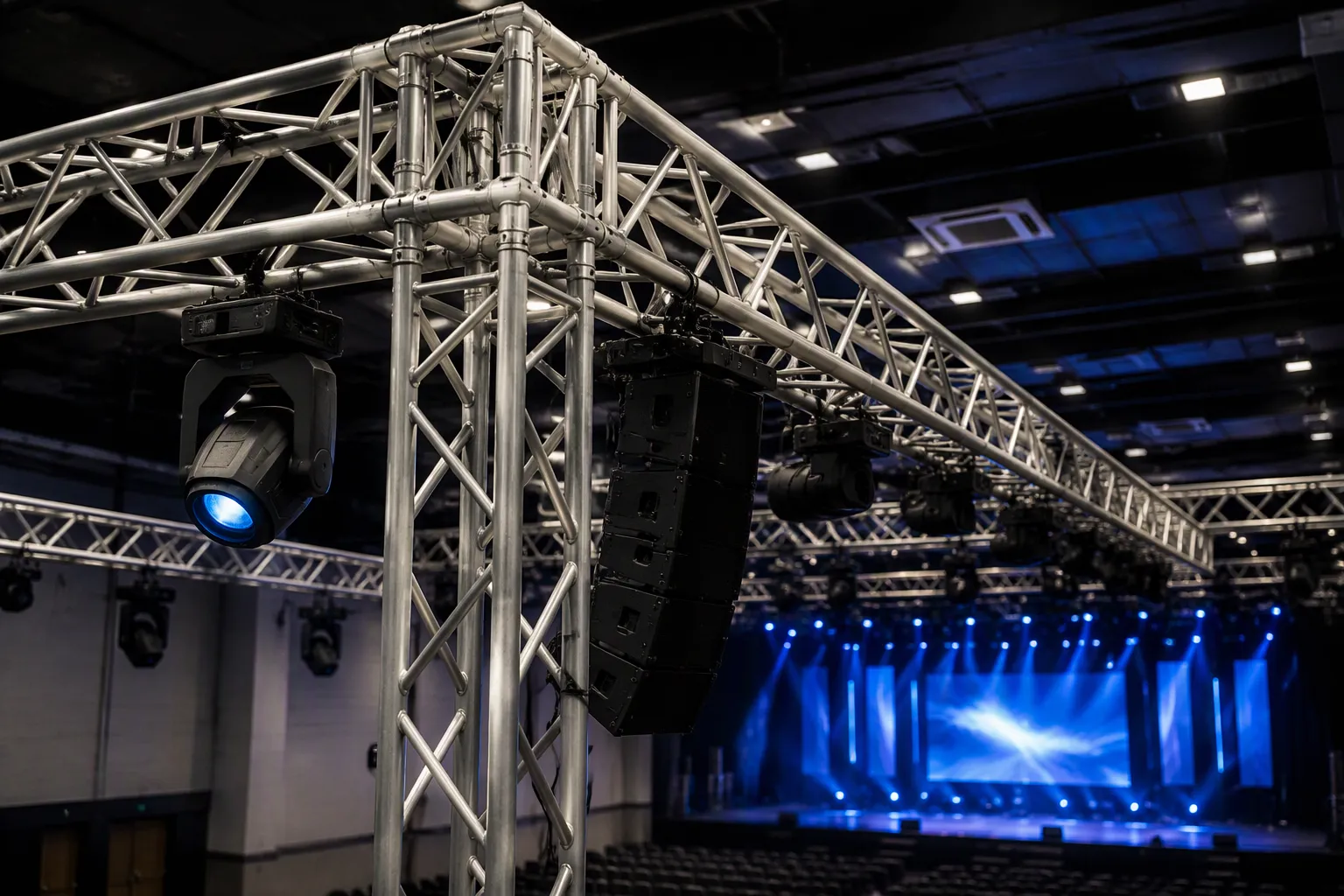
An aluminum box truss is a structural framework made from aluminum alloy with a square or rectangular cross-section. You get lightweight strength for support and rigging. GF-Truss stands out in this space. What Is a Aluminum Box Truss, and where does it serve? The entertainment segment leads global demand, with North America dominating the market.
Key Takeaways
-
Manufacturers build aluminum box trusses from 6061-T6 alloy to provide lightweight strength for portable rigging.
-
Apply TUV-certified box trusses with a 5:1 safety factor for overhead loads at events.
-
Box truss systems allow quick reconfiguration between stage rigging and exhibition displays without welding.
What Is a Aluminum Box Truss?
Construction and Materials
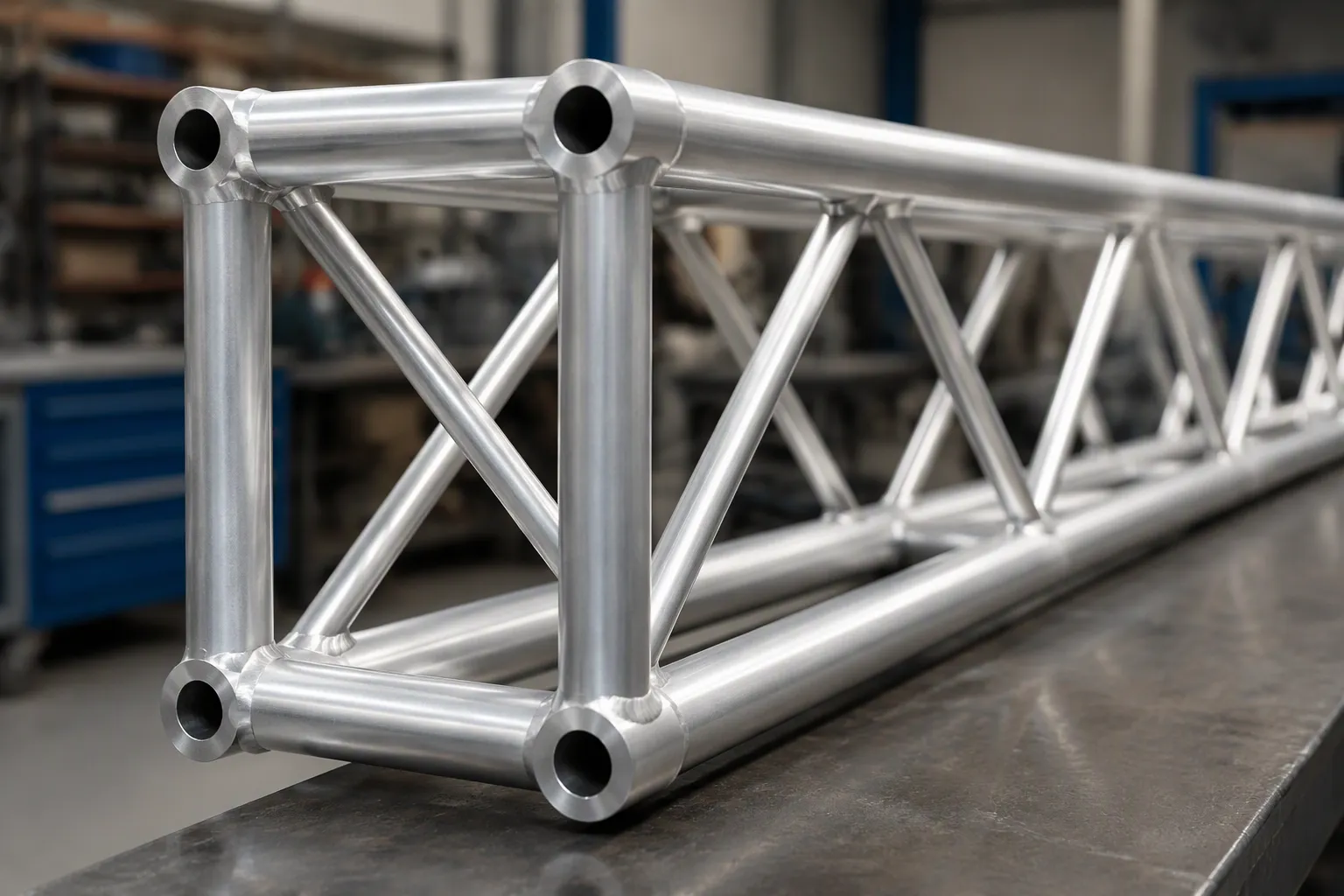
A box truss builds from four main tube cords positioned at each corner of the cross-section. Diagonal webbing connects these cords and creates the distinctive open-web pattern. This diagonal network provides necessary shear resistance and prevents the chords from buckling under load. The result is a square or rectangular frame that handles both vertical and horizontal forces efficiently.
Manufacturers typically use 6061-T6 aluminum alloy for general-purpose box truss applications. This alloy delivers a tensile strength of approximately 260 MPa with a yield strength of about 240 MPa and elongation between seven and ten percent. You will find 6061-T6 in bolt truss systems and exhibition structures that require complex extruded profiles. For heavy-duty applications like roof truss and speaker towers, manufacturers prefer 6082-T6 alloy. This material provides higher tensile strength between 290 and 310 MPa, making it suitable for spigot truss systems. GF-Truss selects materials based on specific load requirements for each truss model.
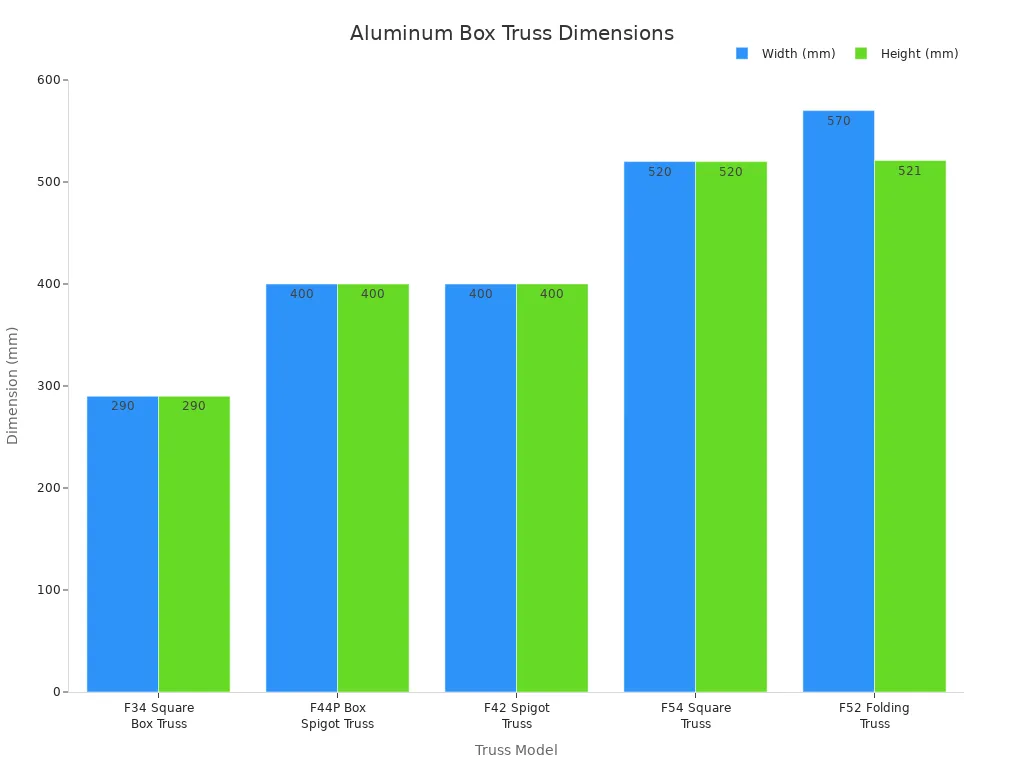
Standard box truss dimensions vary across models. The F34 square box truss measures 290mm by 290mm with 50mm main tubes and 2mm wall thickness. The F54 square truss reaches 520mm by 520mm with 4mm wall thickness. Many production units use a main chord outer diameter of 1.9 inches with wall thickness of 0.145 inches. The chart below compares cross-sectional dimensions across popular truss models.
Understanding what Is a Aluminum Box Truss starts with recognizing these construction details and material choices.
Key Advantages
Weight reduction provides the most significant benefit. An aluminum box truss from 6061-T6 offers a yield strength-to-weight ratio of 2.8 to 1 compared to steel. You receive nearly three times the strength per unit weight. A steel beam carrying the same load needs more mass, which makes aluminum ideal for portable structures that require frequent assembly and transport.
Corrosion resistance improves durability. Anodized aluminum gives excellent protection against moisture and chemicals. Powder coating also shields the surface, though it wears more easily than anodizing. Selecting the right finish extends equipment life and reduces maintenance costs.
Certifications confirm structural safety. TUV certification validates engineering claims through destructive load testing, weld analysis, and raw material verification. Compliance with ANSI E1.2-2021 ensures the truss meets international safety requirements. GF-Truss pursues these certifications for reliable box truss applications across events and exhibitions.
When evaluating what Is a Aluminum Box Truss, the performance advantages become clear. Proper handling also increases service life significantly. Regular inspection of welds and connections, along with correct assembly procedures, prevents early wear and maximizes the return on your investment.
Where Is It Used?
Events and Entertainment
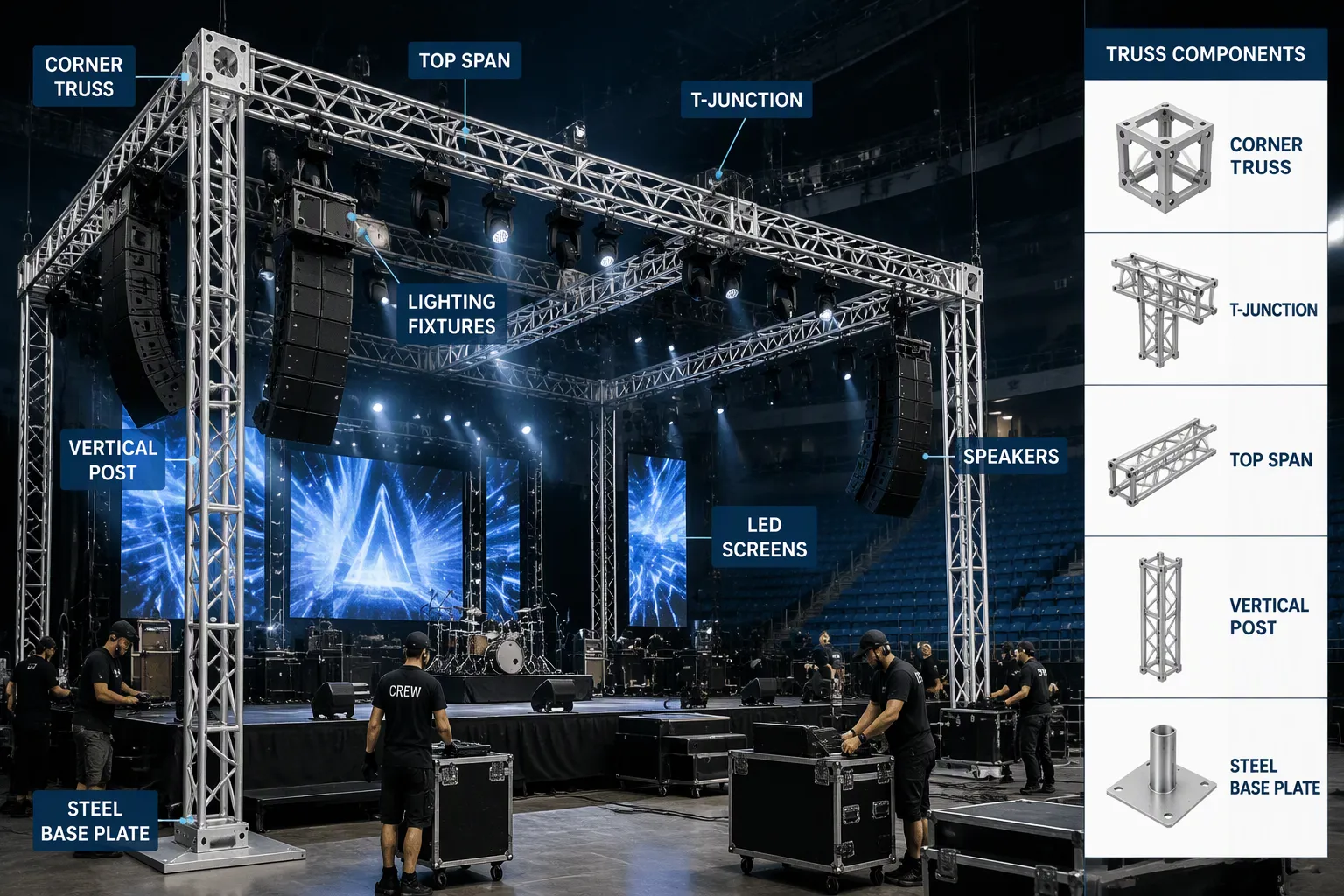
Concert and festival stages represent the most visible box truss for stage application. You see these structures supporting lighting rigs, LED screens, speakers, and banners at live events worldwide. A single box truss span can carry substantial overhead loads while remaining portable enough for touring productions.
Consider the Global Truss 40x40x12 ft Square Box Truss System as a concrete example. This structure uses the Global Truss F34 aluminum box truss and assembles to actual dimensions of 39.24 x 39.24 x 11.44 ft. The system includes eight F34 box truss vertical posts at 9.84 ft each, eight SQ-4137 steel base plates, four SQ-4126 3-way 90° corner truss pieces, four SQ-4129 3-way T-junction truss pieces, eight F34 box truss top spans at 11.48 ft, and eight F34 box truss completing segments at 5.74 ft. You can deploy this configuration for concert stages, festivals, DJ events, convention booths, and corporate productions.
Safety factors matter enormously for overhead loads. Static loads like deck weight and stationary equipment require a safety factor of 5:1 or 8:1. You should always use manufacturer load tables rather than estimating. Dynamic loads from wind, movement, or performers need an additional 25–50% margin. A jumping person can generate 2–4 times their body weight in force. These figures apply directly to any box truss applications involving human movement or outdoor exposure.
Exhibitions and Architecture
Exhibition booths, signage, video walls, structural frames, and architectural design elements all rely on box truss systems. The exhibition segment alone accounts for an estimated 42% of the global box truss market, making it the industry standard. In specific segments of the event and exhibition industry, box truss commands up to 60% market share. Box truss also represents a significant portion of the $942.3 million aluminum truss market projected for 2025.
Temporary structures like booths, sheds, and ground support systems benefit from the rapid assembly that box truss enables. You can reconfigure these frameworks between events without specialized welding or fabrication. Architectural applications use box truss for decorative ceiling grids, entrance canopies, and display frameworks that require both strength and visual openness.
GF-Truss supplies box truss solutions for all these applications. Whether you need a box truss for stage production or a permanent architectural installation, the same structural principles apply. Understanding what Is a Aluminum Box Truss helps you select the right model for each use case.
An aluminum box truss is a square or rectangular aluminum framework for support and rigging. You see it in concerts, exhibitions, and architecture. Its strength, light weight, and versatility drive widespread use. GF-Truss delivers reliable solutions. The aluminum trusses market will grow from USD 450 million in 2026 to USD 750 million by 2033, at a 7.5% CAGR. This structure remains vital for live events and temporary structures.
FAQ
Which aluminum alloy should you choose for a box truss?
You pick 6061-T6 for general use and 6082-T6 for heavy loads. Both alloys resist corrosion well. GF-Truss matches the alloy to your aluminum box truss load requirements.
How do you confirm a box truss is safe for overhead loads?
You check for TUV certification and ANSI E1.2-2021 compliance. You also apply a 5:1 safety factor for static loads. Dynamic box truss applications need an extra 25–50% margin.
Can you use one box truss system for both stages and exhibitions?
Yes. The same frame supports a box truss for stage rigs and exhibition booths. You reconfigure the sections between events without welding or custom fabrication.