Why Is Defoamer Essential in the Paint Industry?

In the paint industry, foam formation is a major concern that can disrupt production and degrade product quality. Whether it is during the mixing process, application, or storage, foam can cause inconsistencies in paint viscosity, poor surface finish, and even equipment malfunctions. That’s why choosing the right defoamer is essential to maintain high-quality paint production and optimize efficiency. But with various options available, how do you know which defoamer is the best fit for your system?


Comparing Defoamers for Paint Production: Silicone vs. Polyether-Based Solutions

There are several types of defoamers used in paint production, but two of the most common categories are silicone-based defoamers and polyether-based defoamers. Understanding the differences between these two types can help you select the best solution based on your paint formulation and processing conditions.


Silicone-Based Defoamers: Quick Action, High Stability

Silicone defoamers are typically known for their rapid foam-breaking properties and high stability in harsh environments, including high temperature and shear conditions. They are commonly used in solvent-based and high-viscosity paints.

Advantages:
  • Fast Foam Knockdown: Quickly breaks foam upon application.
  • High Temperature Tolerance: Performs well under higher temperatures.
  • Durable: Provides long-lasting suppression.

Best Applications:
  • High-gloss coatings
  • Solvent-based paints
  • Industrial coatings
Polyether-Based Defoamers: Effective, Economical, and Surface-Friendly

Polyether-based defoamers, on the other hand, are known for their cost-effectiveness and compatibility with water-based paints. They work well in formulations that require minimal impact on the paint’s appearance and texture.


Advantages:
  • Cost-effective: Less expensive compared to silicone defoamers.
  • Low Impact on Surface Properties: Does not affect gloss or surface quality.
  • Suitable for Water-Based Paints: Performs well in emulsions and waterborne systems.
Best Applications:
  • Water-based paints
  • Architectural coatings
  • Decorative finishes


Comparison of Silicone vs. Polyether-Based Defoamers


Property
Silicone-Based Defoamer
Polyether-Based Defoamer
Speed of Action
Fast foam break
Moderate foam suppression
Temperature Tolerance
High tolerance to heat
Moderate, sensitive to heat
Cost
Higher cost
More economical
Impact on Surface Quality
May affect gloss and texture
Minimal impact on gloss and texture
Better for
Solvent-based and industrial paints
Water-based paints and emulsions

Why Choose Rickman Defoamer for Your Paint Production?

Rickman’s defoamer solutions are designed with the specific needs of the paint industry in mind. We offer both silicone and polyether-based defoamers, providing versatile solutions that cater to different production environments. Our defoamers are formulated to provide optimal foam control, reduce production time, and improve overall product quality, ensuring that your paints maintain their desired properties throughout the manufacturing process.


FAQ

Q1: What is the difference between silicone and polyether-based defoamers?
A1: Silicone-based defoamers are typically faster-acting and more stable at higher temperatures, making them ideal for solvent-based and industrial coatings. Polyether-based defoamers, on the other hand, are more economical and work well in water-based paints, offering minimal impact on surface quality.


Q2: How do I know which defoamer to choose for my paint formulation?
A2: The choice of defoamer depends on factors such as the type of paint (solvent-based or water-based), the production process, and the desired finish. Silicone defoamers are ideal for high-viscosity and solvent-based paints, while polyether defoamers are more suitable for water-based formulations.


Q3: Can Rickman help me optimize foam control in my paint production?
A3: Yes! Rickman offers personalized solutions and technical support to ensure the most effective foam control for your paint formulations, optimizing production efficiency and product quality.
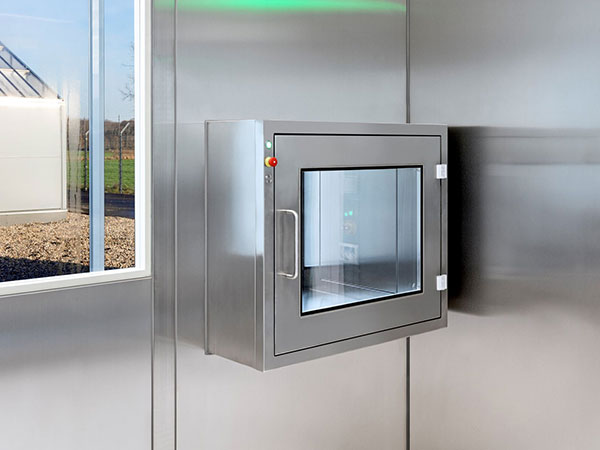
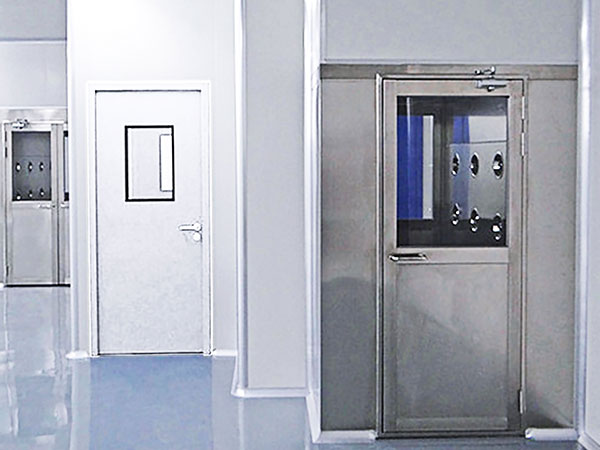


Are air shower and pass box used for the same purpose in cleanrooms?

The core functions and detailed differences between air shower and pass box in cleanrooms:

The core commonality of both is to control contamination and maintain the cleanroom environment level. Both must comply with regulations and standards such as GMP and ISO 14644. However, there are significant differences in their applicable objects, working principles, and operating requirements, as detailed below:


KLC's pass box


 I. Similarities 

1. Structural Anti-Cross-Contamination

Both are equipped with a double-door interlocking device, preventing both doors from opening simultaneously. This physically blocks the direct airflow between the cleanroom and non-cleanroom (or different levels of cleanrooms), preventing cleanroom pressure imbalance and pollutant diffusion.


KLC's Air shower


2. Consistent Regulations and Management Requirements

Both must be included in the cleanroom equipment management system, with complete maintenance and calibration records, and subject to regular audits and inspections.Daily cleaning requires the use of lint-free cleanroom wipes to wipe the inner walls, and no miscellaneous items are allowed to be stored inside the equipment to prevent them from becoming new sources of contamination.


3. Similar Maintenance and Calibration Principles

Both require regular inspection of the door seal integrity and the operating status of functional components, and timely replacement of aging consumables (such as filters and UV lamps) to ensure that the equipment is always in a compliant operating state.


 II. Differences 

1. Applicable Objects

Air shower are applicable to personnel and large material carriers, such as operators and inspectors entering the cleanroom, as well as stainless steel trolleys and large turnover boxes carrying materials. They can meet the needs of large and bulk material carriers.

Pass box are only suitable for small materials, tools, and documents, such as sample bottles, reagent tubes, cleanroom wipes, sterile gloves, and clean versions of batch production records. Personnel or large items are strictly prohibited from passing through.


2. Core Purification Principles

The air shower chamber uses high-speed airflow blowing and filtration as its core principle.A fan blows air, filtered by a high-efficiency particulate air (HEPA) filter, through nozzles at a speed of no less than 25 m/s, forcibly removing dust particles and microorganisms attached to personnel clothing fibers and trolley surfaces. The blown-off contaminants are collected through the return air vents and filtered again, forming a circulating purification process.

The pass box uses physical isolation and auxiliary disinfection as its core principle. The basic model only achieves spatial isolation through interlocking doors and has no active purification function; models with UV disinfection have a built-in 253.7nm wavelength UV lamp, which, when activated, irradiates for 15-30 minutes, killing bacteria by destroying the DNA structure of microorganisms.There is no airflow blowing function throughout the process, so it does not change the attachment state of particles on the surface of objects.


3. Installation Location and Environmental Requirements

The air shower chamber should be installed in the buffer zone at the main entrance for personnel/materials in the clean area, forming a three-level separation between the non-clean area and the clean area (non-clean area → air shower chamber → clean area). The installation area needs to have sufficient space for passage to ensure that the doors can be fully opened. It also needs to be linked to the pressure difference of the clean area; the pressure difference inside the air shower chamber should be slightly lower than the clean area and higher than the non-clean area.

The pass box is directly embedded in the partition wall between the clean area and the non-clean area, or between different levels of clean areas. The installation location should be convenient for personnel on both sides to operate. The wall opening size needs to match the specifications of the pass box. No additional pressure difference control is required; it only needs to ensure consistency with the environmental parameters of the surrounding area.


4. Operating Procedure

The operating procedure of the air shower chamber is as follows: After personnel or a trolley enters, the outer door closes, and the interlocking device locks the inner door; the infrared sensor triggers the fan to blow air, with a preset blowing time of 15-30 seconds (adjustable according to the cleanroom class); after the blowing is completed, the fan stops, the inner door unlocks, and personnel or the trolley can enter the clean area. Forcibly opening the interlocking doors is prohibited throughout the process. The emergency stop button should only be used in emergency situations. The pass box operates as follows: personnel on the non-clean side open the outer door, place the items inside, and close the outer door to ensure the interlock is activated; if it is a model with UV disinfection, the UV lamp must be turned on and remain on for the set disinfection time before being turned off; personnel on the clean side confirm that the outer door is closed, then open the inner door to retrieve the items, and finally close the inner door. Note that it is prohibited to open either door while the UV lamp is on to prevent UV radiation leakage and potential injury.


5. Maintenance and Calibration Details

Daily maintenance of the air shower room includes checking that the fan is running without abnormal noise, the sensing device is sensitive, and the interlock function is working correctly; weekly maintenance includes cleaning the pre-filters, wiping the nozzles, and checking that the door seals are not damaged; monthly maintenance includes checking the integrity of the HEPA filter (PAO leak test) and calibrating the airflow speed to be no less than 25 m/s; every six months, the pre-filters should be replaced and the fan motor should be inspected.


Daily maintenance of the transfer window includes checking that the interlock function is working correctly, the UV lamp indicator light is on (for models with disinfection), and the observation window is free of stains; weekly maintenance includes wiping the internal surfaces with 75% ethanol and checking that the door hinges rotate smoothly; monthly maintenance includes calibrating the UV lamp irradiation intensity (which must reach a bactericidal threshold of ≥70 μW/cm²) and replacing aging seals; quarterly maintenance includes replacing the UV lamp tubes (which typically have a lifespan of 8000 hours).


 III. Complementary Functions 

The air shower room addresses the active purification of personnel and large material carriers, preventing the entry of large amounts of contaminants into the clean area; the transfer window addresses the sterile isolation and transfer of small items, avoiding disruption of the clean area pressure difference and environmental stability due to frequent door openings. Both are indispensable and together constitute a comprehensive pollution control system for personnel and material entry and exit in the clean area.

Why always long lines to play large water slides?

If you enjoy in water parks, especially large water parks, you will see there are always long lines to play large water slides. Like Vinterhal in Rulantica water park, the "shock wave" in Aquaventure World Atlantis Dubai, the Funnel Web in Jamberoo Action Park, World's first HIVE 35 family tower complex in Chimelong Water Park etc.


First of all, mostly they are the most thrilling game in the water park, so they are most popular atrractions in the park. But large water slides takes big area and large investment, so mostly the water park do not build many of them in one water park. And most of them need to devote more efforts to running safely, however, most of them have very limited capacity.


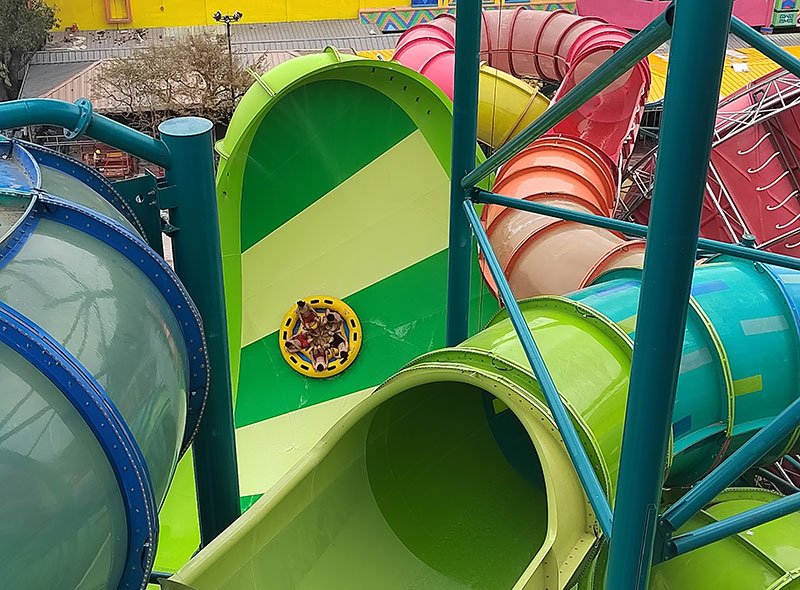
For example, in the incredible Funnel web in Jamberoo Action Park, you’ll drop at 30 km/h deep into the spider’s funnel, you will see the world's biggest spider sculpture just at the side of the tornado slide, you will get unique experience. The cloverleaf tube raft with seat pad from Guangdong H-Fun ensure your safety on the slide, but it can only take 4 players each time, so you need to wait if there are many palyers.


Cloverleaf tube for water park


In Maya Playa water park of OCT group in Xi'an, larger water slide can use 5 person tube with seatpad from Guangdong H-Fun Water Recreational Articles Co., Ltd. which can take 5 players each time.


5 person tube with seatpad


In the largest and longest family water coaster the "shock wave" in Aquaventure World Atlantis Dubai and World’s first HIVE 35 family tower complex with enormous Double TORNADO 60 in Chimelong Water park, the new design round raft with seperate seats from Guangdong H-Fun can provide safe and comfortable slide experience.


raft boat for waterpark family raft slide


On the other hand, we usually take much less time to wait to play on racer slides, including mats racer slides and tube raft racing slides. They can allow more players to "race" at the same time and they are faster.


Like Phoenix fly in Adventure Bay water park in OCT group Xiangxiang, with 8 lanes of steel mat slide, and the tube racing slide in Zhejiang Longemont Waterpark, they provide 6 lanes of double tube racing slide, which can allow 12 players play at the same time, which can be rather thrill and save more time of waiting. Their racer mats and water park double tubes also provided by Guangdong H-Fun Water Recreational Articles Co., Ltd.


water park double tubes

KLC Air Purification Technology Empowers Tissue Culture Industry, Building a Solid Sterile Barrier

The breakthrough in rubber tree tissue culture technology is accelerating the upgrading of modern agriculture. The innovative technology from the Rubber Research Institute of the Chinese Academy of Tropical Agricultural Sciences, through somatic embryogenesis and cutting propagation, has achieved efficient propagation and quality improvement of rubber seedlings, injecting new vitality into the plant tissue culture industry.


However, plant tissue culture requires extremely high demands on the growth environment, necessitating highly clean laboratory conditions to ensure sterile growth. Traditional air purification equipment often fails to meet the stringent requirements for particle and microbial control, leading to increased contamination risks and affecting the survival rate and quality of tissue-cultured seedlings.


Therefore, the upgrading of air purification equipment has become crucial for the development of tissue culture technology.


With 20 years of accumulated experience in air purification technology, KLC, with its innovative technology and professional design, provides comprehensive clean environment support for rubber tree tissue culture technology. Together, they have built an efficient, intelligent, and easy-to-maintain air purification system, providing strong protection for the growth environment of plant tissue culture.


 Wide-Area Purification, Ensuring Sterile Growth 

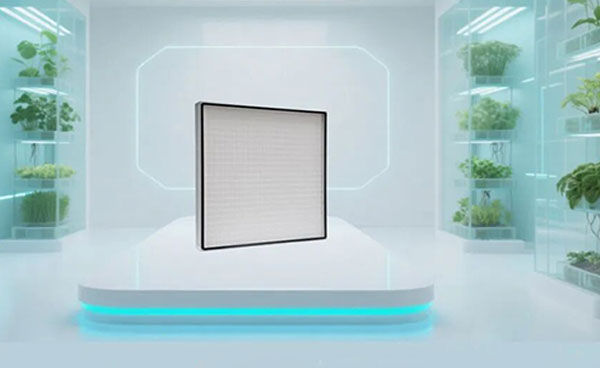
KLC's HEPA air filters, with their excellent filtration performance, ensure that the air cleanliness of the tissue culture laboratory reaches ultra-high efficiency standards. Its high-efficiency filtration performance ensures that tissue-cultured seedlings grow under sterile conditions, reducing the risk of contamination. Continuous air purification covers the entire space, achieving seamless purification and providing stable support for all areas of the tissue culture laboratory, ensuring pollution-free operation throughout the tissue culture process and guaranteeing the continuous and stable operation of a large clean area.


 Air Shower Protection, Blocking Contamination Invasion 

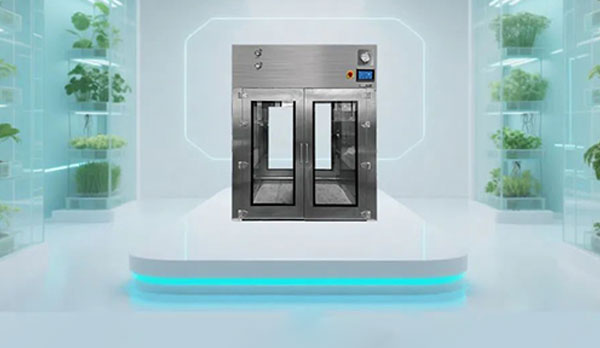
KLC air shower pass-through windows are used for material transfer, ensuring that materials are air-showered before entering the laboratory to remove surface contaminants. This effectively prevents external contaminants from entering the laboratory through materials, protecting the growth environment of tissue-cultured seedlings.


 Horizontal Cleanliness, Protecting Sterile Operations 

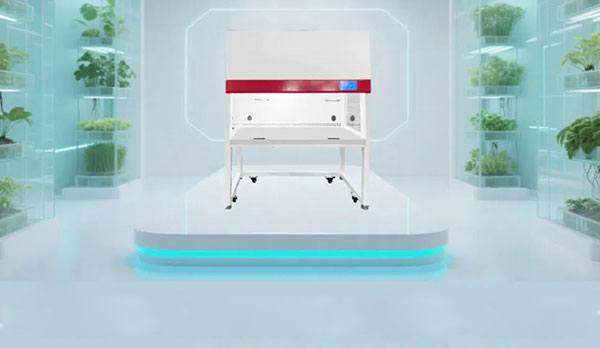
Some plant tissue culture processes require highly clean bench to ensure sterility. KLC horizontal laminar flow bench provide a horizontal clean airflow, ensuring the air cleanliness of the work area. This provides a sterile working environment for operations such as inoculation and cultivation of rubber tree tissue-cultured seedlings.


 Laminar Flow Coverage, Precisely Guaranteeing Sterile Space 

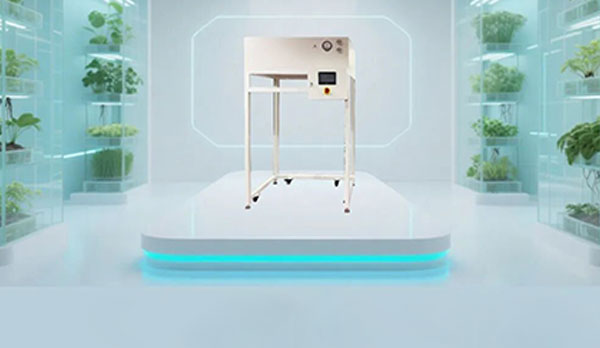
Plant tissue culture requires extremely high cleanliness in localized operating areas, especially in some high-precision experimental operations. KLC laminar flow hoods, through their precise laminar flow design, provide a highly clean air environment for specific areas.

Their vertical or horizontal laminar airflow patterns effectively remove contaminants from localized areas, ensuring sterile conditions in critical operating zones. Whether for inoculation, cultivation, or other sensitive operations, KLC laminar flow hoods provide precise cleanliness assurance for tissue culture growth, facilitating the smooth progress of experimental procedures.


KLC's air purification solutions provide high-quality clean air for plant tissue culture technology and offer strong support for the development of modern agricultural technology. KLC is committed to providing customized air purification solutions for tissue culture laboratories, research institutions, and agricultural enterprises, helping to advance tissue culture technology.

A Detailed Explanation of Air Filter Applications in Pharmaceutical and Medical Device Manufacturing

The principles, methods, and results of air filtration applications in pharmaceutical and medical device manufacturing systems. In this sector, air filtration is a core element in ensuring product quality, safety, and regulatory compliance, far exceeding the importance of general industrial or residential environments.


 Why Use Air Filtration? 

In pharmaceutical and medical device manufacturing, the core principle of air filtration systems is strict contamination control. The goal is to create and maintain a controlled environment that meets specific cleanliness levels to prevent product contamination from various airborne sources.


 Specific principles and motivations include: 


Preventing microbial contamination: This is a critical goal, especially in the production of sterile pharmaceuticals (such as injectables and eye drops) and implantable/sterile medical devices. Airborne microorganisms such as bacteria, fungal spores, and viruses can cause product failure, lead to patient infection, or even be life-threatening if they land on product or contact surfaces. Air filtration (particularly HEPA/ULPA grades) is the primary means of removing airborne microorganisms and their carriers (such as dust particles).


Preventing Particulate Contamination: Non-viable particles in the air, such as dust, fibers, metal shavings, and skin flakes, are also serious contaminants for pharmaceuticals (especially injectables, which can cause blood vessel blockage) and precision medical devices (which can affect performance or trigger foreign body reactions in the body). High-efficiency filtration can keep the number of airborne particles to extremely low levels.


Preventing Cross-Contamination: In workshops producing different types of pharmaceuticals or active ingredients, air filtration helps coordinate airflow design to prevent powder or active ingredients from previous batches from spreading through the air and contaminating subsequent products.


 II. How is Air Filtration Implemented? 


Air filtration in pharmaceutical and medical device production is a complex and sophisticated systems engineering process, primarily manifesting in the following aspects:


 Cleanroom HVAC System: 


Core Support: Air filtration functions are primarily integrated into HVAC systems designed specifically for cleanrooms.


Multi-stage Filtration Strategy: Air handling units (AHUs) typically have multiple stages of filtration:


Pre-filter: Typically rated G4/MERV 8/ISO Coarse, removes large particles and protects the medium-efficiency filter.


Medium/High-Medium Filter: Typically rated F7-F9/MERV 13-15/ePM1, ePM2.5, further purifies the air and reduces the burden on the final HEPA filter.


Terminal Filtration: This is the most critical step in ensuring cleanroom quality. These filters are installed at the very end of the air supply system, directly supplying air into the cleanroom.


Filter Type: HEPA (High-Efficiency Particulate Air) filters (H13, H14) or ULPA (Ultra-Low Penetration Air) filters (U15 or higher) are commonly used. The specific cleanliness level to choose depends on the required cleanliness level of the area (for example, an ISO 8/GMP Grade D area might use H13, an ISO 7/GMP Grade C area uses H14, and an ISO 5/GMP Grade A/B core area must use H14 or higher, combined with unidirectional airflow).


 Installation Type: 


High-efficiency air inlets: HEPA/ULPA filters are installed in a custom-designed air inlet housing, with air delivered through diffusers (often used in areas with non-unidirectional airflow).


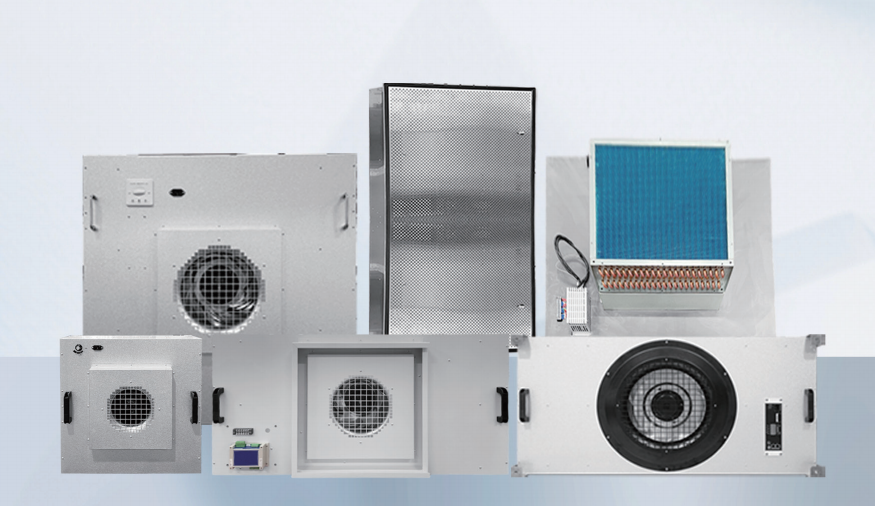
Fan filter units (FFUs): Fans and HEPA/ULPA filters are integrated into a modular unit. These units are densely mounted in the ceiling to create vertical, unidirectional (laminar) airflow over a large area. They are the primary method for achieving an ISO 5/GMP Grade A environment.


Airflow pattern: This works closely with filtration to control the direction of air flow to remove contaminants.


Unidirectional Flow (Laminar Flow): In critical operating areas (such as aseptic filling and areas directly exposed to product, corresponding to GMP Grade A), HEPA/ULPA-filtered air flows through the work area in uniform, parallel streams (typically vertically downward) at a specific velocity (e.g., 0.36-0.54 m/s). This quickly "blows away" generated particles and prevents them from settling above the product or on critical surfaces.


Non-Unidirectional Flow (Turbulent Flow): In areas with lower cleanliness requirements (such as GMP Grades C and D), filtered air is introduced through supply vents, mixed with room air to dilute contaminants, and exhausted through return vents. Maintaining cleanliness relies on a sufficiently high air changes per hour (ACH).


 Localized Protection & Containment Systems: 


Laminar Flow Hoods / Biological Safety Cabinets (BSCs): These provide a small, unidirectional, clean environment to protect products or personnel.


Isolators / Restricted Access Barrier Systems (RABS): These provide highly enclosed physical barriers, maintaining a GMP Grade A environment and separating personnel from the core aseptic processing area. They are a key technology in modern aseptic production, relying on HEPA/ULPA filtration for both internal air circulation and exchange with the external environment.


Exhaust Air Filtration: For operating rooms or equipment generating hazardous dusts (such as highly active pharmaceutical powders), aerosols, or biohazardous materials, exhaust air must be filtered through HEPA filtration (sometimes even two stages of HEPA) before discharge to protect personnel and the environment. A bag-in/bag-out (BIBO) filter replacement system is often used to ensure that operators do not come into contact with contaminated filters when replacing used filters.


 III. Application Outcomes (What are the Outcomes?) 

The successful application of air filtration systems in the pharmaceutical and medical device sectors is crucial:

Major Pros (Pros):


Ensuring Product Safety and Quality: Minimizing the risk of microbial and particulate contamination ensures the safety and effectiveness of finished drugs and medical devices, which is directly related to patient health and life.


Meeting Regulatory Compliance: This is a prerequisite for companies to obtain production licenses and market their products. Compliance with standards such as GMP and ISO 14644 is mandatory. Failure to comply can result in serious consequences such as warning letters, product recalls, production suspension, and even license revocation.


Improving Production Reliability and Consistency: A stable, clean production environment reduces process fluctuations and deviations caused by environmental factors, helping to ensure consistent quality between product batches.


Reduce Batch Rejection Due to Contamination: Effective contamination control significantly reduces the risk of products failing quality inspection due to microbial or particulate contamination, thereby mitigating significant economic losses.


Ensure Operator Safety: Exhaust air filtration and isolation technologies protect employee health in processes handling highly active or toxic substances.


Improve Corporate Reputation and Market Competitiveness: Strict adherence to high-standard production practices is the cornerstone of the credibility of pharmaceutical and medical device companies.


 Summary: 

Air filtration plays an absolutely core role in pharmaceutical and medical device manufacturing. It is a cornerstone technology for ensuring product sterility and the absence of particulate contamination, thereby safeguarding patient safety and meeting regulatory requirements. Its application is highly systematic and sophisticated, closely integrated with HVAC systems, air flow management, and isolation technologies. While costly and maintenance-intensive, the resulting product safety, regulatory compliance, and production reliability are fundamental to the survival and growth of this industry.

Energy-Saving Optimization Solution for Air Filters in Clean room Air Conditioning Systems for the Semiconductor Industry

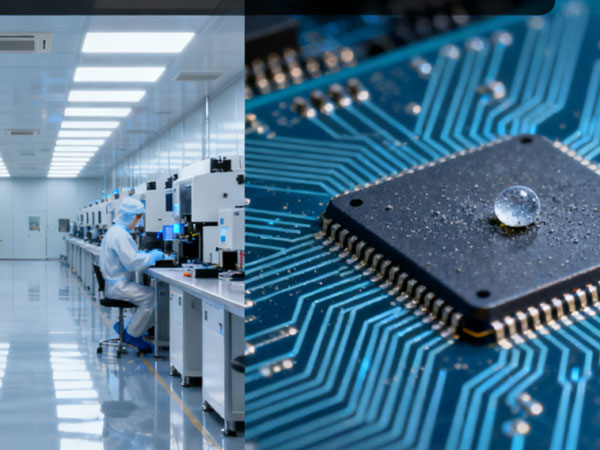
The production environment for semiconductor devices is extremely sensitive to the presence of contaminants. Even small amounts of gaseous or particulate contaminants can reduce product quality. Therefore, cleanliness requirements in semiconductor device manufacturing are far higher than in other industries.


Throughout the entire chip and semiconductor device manufacturing process, process environment contamination control is crucial. The air cleanliness of core processes needs to meet ISO Class 1 standards, with gaseous molecular contaminant (AMC) concentrations below one part per billion. Substandard process environments can lead to a significant reduction in product yield.


Ordinary air contains a large number of particulate contaminants such as microparticles and dust, as well as gaseous contaminants such as sulfur dioxide, nitrogen oxides, and ammoniaaa. Only after treatment can it enter a cleanroom. Because cleanrooms used for producing semiconductors and other microelectronic devices must maintain standard cleanliness levels 24/7, the cleanroom air conditioning system (including the exhaust system), its associated heat and cold sources, and corresponding delivery systems must operate 24 hours a day, which is significantly different from other conventional air conditioning systems.


As the power source, the fan consumes most of its energy due to the combined resistance of its components. Furthermore, the air filter's resistance accounts for approximately 50% of the fan's total head. Therefore, reducing the energy consumption of air conditioning filters is crucial for lowering building energy consumption and carbon emissions. From the perspective of improving energy efficiency and reducing energy consumption, optimizing air filter performance without compromising filtration requirements is essential.


Filter energy consumption is directly determined by average resistance and is related to initial resistance and dust holding capacity. Reducing initial resistance, increasing dust holding capacity, and minimizing the increase in resistance during dust holding are effective ways to reduce energy consumption, thus lowering energy costs for customers and contributing to environmental protection.

FFU The Ideal Choice for High-Efficiency Ventilation in Clean room, Part of Semiconductor and Biological Clean room

Cleanrooms place stringent requirements on ventilation systems. They must provide sufficient airflow and pressure while precisely controlling temperature and humidity, ensuring consistent air quality. These requirements apply to various airflow patterns and room sizes.


Many production processes mandate cleanroom conditions because cleanrooms, and even ultra-cleanrooms, guarantee the environmental quality of products during rigorous manufacturing. Even minute impurities in the air can adversely affect production processes, leading to high scrap rates. For example, production environments in fields such as optics and lasers, aerospace, biosciences, medical research and treatment, food and pharmaceutical production, and nanotechnology require a near 100% dust-free and bacteria-free air supply.


However, air conditioning and ventilation systems in cleanrooms consume significant amounts of energy due to high air exchange rates, making energy efficiency and cost critical issues. Therefore, in addition to meeting aerodynamic performance requirements, fans must also meet key standards such as compact size, low noise, use cleanroom-compatible materials, proper control capabilities, networking capabilities, and energy-efficient operation.


FFU are designed specifically to address these needs. They effectively improve ventilation in cleanrooms, ensuring the stability of the production environment and product quality.
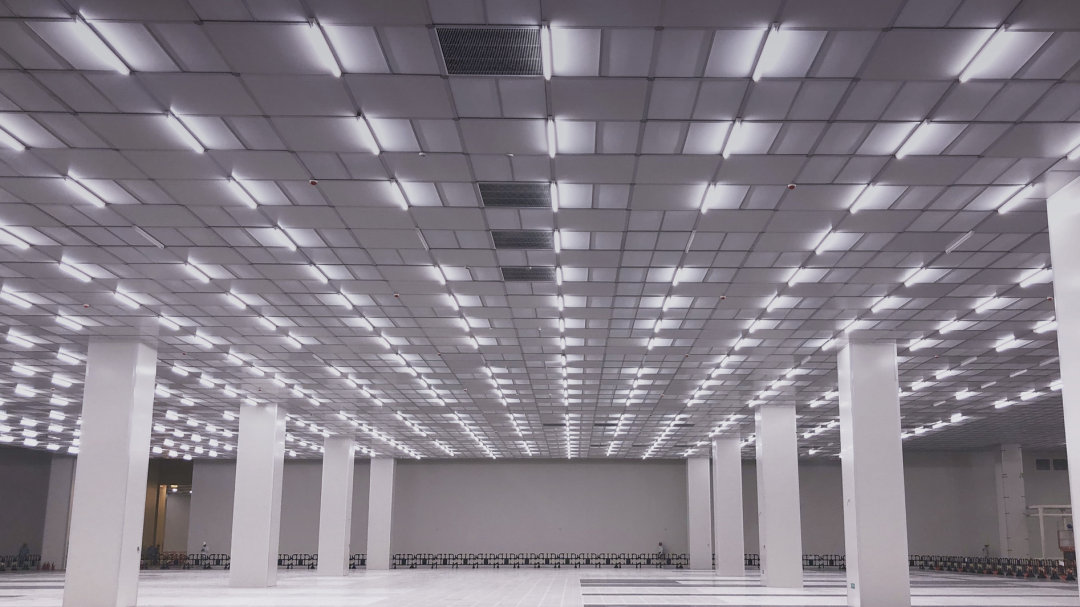
 

FFU fan filter unit


An FFU is a device that cleverly combines a filtration system with a fan. It features a ceiling-mounted design, is compact and efficient, and requires minimal installation space. The FFU contains pre-filters and high-efficiency filters. Air is drawn in from the top by the fan, finely filtered, and then uniformly delivered at a velocity of 0.45 m/s ± 20%.


FFU play a crucial role in cleanrooms, clean benches, clean production lines, modular cleanrooms, and localized Class 100 environments. These applications span semiconductor, electronics, flat panel display, and disk drive manufacturing, as well as optics, biomedicine, and precision manufacturing—industries with stringent requirements for air pollution control.


The flexibility and ease of use of FFU: The self-powered, modular design of the FFU makes replacement, installation, and relocation simple and easy. Its matching filters are easy to replace, not limited by location, and ideal for the zoned control needs of cleanrooms. FFU can be easily replaced or moved to adapt to different clean environments as needed. Furthermore, FFU can be used to easily create simple clean benches, clean booths, clean pass-through cabinets, and clean storage cabinets to meet various cleanliness requirements. Its ceiling-mounted installation method, especially in large cleanrooms, significantly reduces construction costs.


Negative Pressure Ventilation Technology: The unique negative pressure ventilation design of the FFU fan filter unit allows it to easily achieve high-level cleanliness in various environments. Its self-powered characteristic maintains positive pressure inside the cleanroom, effectively preventing the infiltration of external particles and ensuring a safe and convenient seal.


Quiet Operation: The FFU fan filter unit boasts excellent quiet operation, maintaining low noise even during prolonged use. Its vibration is very low, ensuring smooth stepless speed regulation and uniform airflow distribution, providing stable support for the clean environment.


 Cleanroom Air Supply Units 


* Rapid Construction: Utilizing FFU technology, there is no need for ductwork fabrication and installation, significantly shortening the construction cycle.


* Reduced Operating Costs: Supplying clean air to cleanrooms with FFU technology is not only economical but also remarkably energy-efficient. Although the initial investment for FFU may be slightly higher than ducted ventilation, their maintenance-free operation over the long term significantly reduces overall operating costs.


* Space Saving: Compared to other systems, FFU systems occupy less floor height within the plenum chamber and take up virtually no space within the cleanroom.


* Wide Applicability: FFU systems can adapt to cleanrooms and microenvironments of varying sizes and cleanliness requirements, providing high-quality clean air. During the construction or renovation of cleanrooms, it not only improves cleanliness but also effectively reduces noise and vibration.


FFU System Applications in Semiconductor Wafer Shops: FFU systems are widely used in cleanrooms requiring ISO 1-4 air purification levels, playing a crucial role, particularly in the vertical laminar flow operations of semiconductor wafer shops. In the technical mezzanine, air is efficiently delivered to the clean production layer via FFU. This airflow then passes through raised floors and waffle slab openings, reaching the clean lower technical mezzanine. Finally, after being processed by DCC (Dry Cooling Coils) in the return air duct, the air returns to the upper technical mezzanine, forming a cycle. This design effectively supports the wafer fabrication workshop's stringent control over the production environment, including temperature, humidity, cleanliness, and vibration damping.


Furthermore, the application of FFU systems in biological laboratories is also significant. When laboratory personnel handle pathogenic microorganisms, experimental materials containing pathogenic microorganisms, or parasites, FFU systems impose special requirements on laboratory design and construction to ensure experimental safety and a pollution-free environment.


Current laboratory purification systems typically consist of multiple parts, including a static pressure layer, a process layer, a process auxiliary layer, and a return air duct. This system primarily relies on FFU to process the air. Its working principle is: the FFU provide the necessary circulation power, mixing fresh air with recirculated air, which is then delivered to the process layer and process auxiliary layer after passing through ultra-high efficiency filters. At the same time, by maintaining a negative pressure state between the static pressure layer and the process layer, the leakage of harmful substances is effectively prevented, ensuring the cleanliness and safety of the laboratory environment.

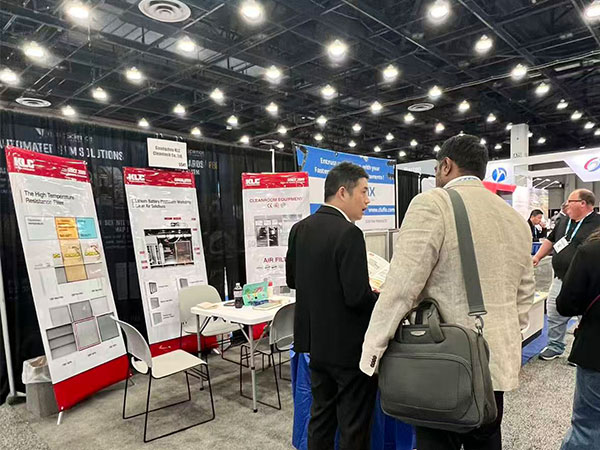
Focusing on future mobility, KLC successfully concluded the 2025 Battery Show and Electric & Hybrid Vehicle Technology Expo

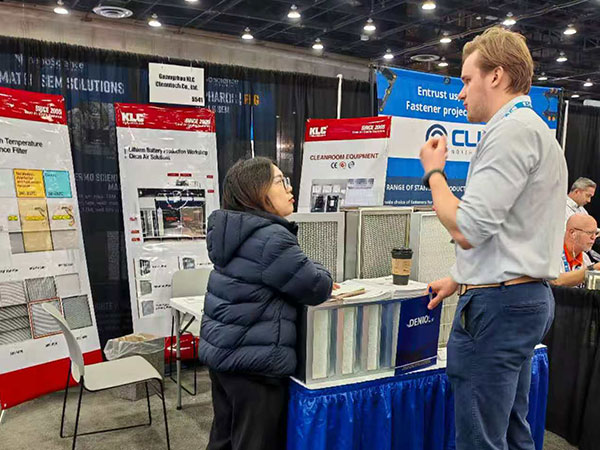
The Battery Show and Electric & Hybrid Vehicle Technology Expo 2025, a highly anticipated annual event for the global new energy industry, was successfully held in the United States on October 9th. As a leading company in air filtration and cleanroom solutions, KLC participated in the exhibition, showcasing cutting-edge technology, professional solutions, and in-depth industry insights. We worked with global customers and partners to successfully demonstrate our key value in supporting the electric vehicle and battery manufacturing supply chain.


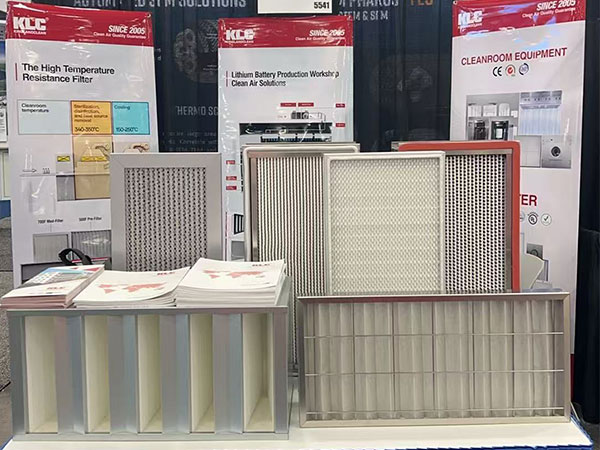
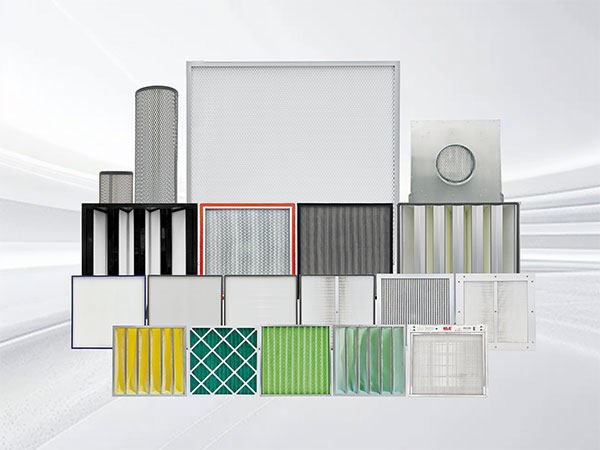
High-precision battery workshop air filters: We showcased HEPA/ULPA high-efficiency filters for controlling the battery production environment. These products effectively remove fine dust and metal particles from the air, ensuring extremely clean battery production, and guaranteeing consistent and safe battery performance from the source, attracting significant attention from battery manufacturers.


 Professional Exchanges, Insights into the Industry 

The KLC booth was bustling with visitors throughout the exhibition. We engaged in hundreds of high-quality, in-depth discussions with representatives from battery manufacturers, electric vehicle OEMs, component suppliers, and research institutions from North America and around the world.


This exhibition was not only a successful brand showcase, but also a valuable journey of learning and insight. We deeply feel that with the rapid development of the electric vehicle industry and the continuous iteration of battery technology, the requirements for "purity" and "precision control" in the production environment are becoming more stringent than ever before.


KLC will use this exhibition as a new starting point to continuously increase R&D investment and continuously optimize our products and technologies, striving to provide safer, more efficient, and more economical air filtration and cleanroom solutions for the global new energy industry chain. We look forward to transforming the sparks generated during the exhibition into fruitful future collaborations and working with industry colleagues to contribute the "pure power of KLC" to driving the future of green mobility.

How do air filters "catch" dust particles?

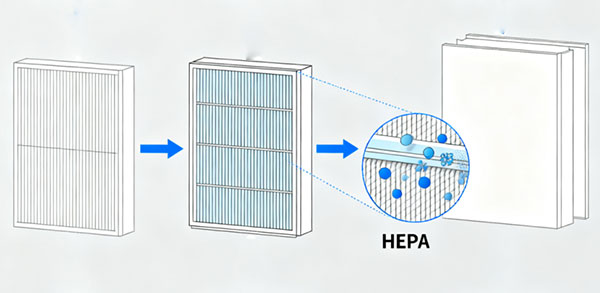
Air filters are filtration-based air purifiers. The HEPA filter we often hear about stands for High-efficiency Particulate Air Filter.


Let's break down the five core principles of air filtration to help you understand its underlying logic.


High-efficiency Particulate Air Filter


1. Interception Effect: The fibers in a filter are intricately arranged. When airborne dust particles come into contact with the surface of the filter fibers, they are directly trapped if the particle is close enough to the filter material. This phenomenon is particularly evident in dense filter materials, such as the three-dimensional mesh structure formed by ultra-fine fibers in meltblown fabric for masks, which can firmly lock viral aerosols within the fiber gaps.


2. Inertial Effect: The complex arrangement of filter fibers in an air filter causes airflow to encounter obstacles and deflect as it passes through the filter material. Dust particles in the air, under the influence of inertial forces, break away from the streamline and collide with the surface of the filter fibers, depositing there. The larger the particle, the greater the inertial force, the greater the likelihood of it being blocked by the filter fibers, and the better the filtration efficiency.


3. Diffusion Effect: The diffusion effect targets ultrafine particles smaller than 0.1 micrometers. Particles smaller than 0.1 micrometers primarily undergo Brownian motion, exhibiting a disordered trajectory, significantly increasing the probability of contact with filter fibers; the smaller the particle, the easier it is to remove.


4. Gravity Effect: When the airflow velocity is lower than the particle settling velocity, larger particles naturally settle under gravity. Flue gas treatment towers in thermal power plants expand the space and reduce the flow velocity, allowing dust to fall into the dust collection hopper like sand settling to the bottom of water. This mechanism is economical and efficient for treating high concentrations of dust, but its effect on suspended particles is limited, and it is usually used as a pretreatment method.


5. Electrostatic Effect: Electrostatic electret technology charges the fibers, giving the filter material the ability to actively capture particles with opposite charges, much like a magnet attracts iron filings. This mechanism is particularly effective for charged particles in PM2.5, and industrial dust removal equipment performs electret treatment on the filter surface.

Invisible Defense" Why is Cleanroom Engineering Key to Quality Competition?

 What is Cleanroom Engineering? 


Simply put, cleanroom engineering is a systematic project that uses air filtration, airflow control, and environmental monitoring to control pollutants such as dust, microorganisms, and harmful gases within specific standards in a cleanroom, while maintaining stable parameters such as temperature, humidity, and pressure differential.


From ISO 14644 cleanliness levels (Class 1 to Class 9) to GMP pharmaceutical workshop standards, the requirements for cleanliness levels vary significantly across industries—the electronics industry may require Class 5 (≤352 0.5μm particles per cubic meter), while food workshops typically only require Class 8.


 Why must factories prioritize cleanroom engineering? 


1. Maintaining the Bottom Line of Product Quality

In precision manufacturing fields such as semiconductors and optical instruments, even particles 1/200th the size of a human hair can cause short circuits and decreased precision; in the biopharmaceutical industry, excessive microbial levels directly violate GMP regulations, posing a risk of production stoppage. 1. Cleanroom engineering controls pollution at its source, reducing product defect rates by over 30%.


2. Compliance is a prerequisite for production.

Industries such as pharmaceuticals, medical devices, and food contact materials are subject to mandatory national cleanliness standards for production environments. Even with advanced technology, workshops that fail cleanroom engineering acceptance cannot obtain production licenses.


3. Reduce hidden production costs.

Uncleaned workshops may increase costs due to frequent rework, batch scrapping, and accelerated equipment wear. A well-designed cleanroom system, while requiring initial investment, can recoup costs in the long run through stable production efficiency.


4. Protect occupational health.

In industries such as chemicals and spray painting, untreated volatile organic compounds (VOCs) and dust in workshops can harm employee health. Cleanroom engineering's waste gas treatment and fresh air systems can simultaneously achieve "clean production" and "healthy work."


 What are the core systems included in cleanroom engineering? 


A complete cleanroom system is not a single piece of equipment, but the result of multiple systems working together:


Air Purification System: The core components are high-efficiency particulate air (HEPA) filters and ultra-high-efficiency particulate air (ULPA) filters, working in conjunction with pre- and medium-efficiency filters to form a three-stage filtration system capable of intercepting over 99.97% of particles as small as 0.3μm.


Envelope Structure: Utilizing dust-proof, mildew-proof, and easy-to-clean materials (such as stainless steel and PVC roll materials), the junctions between walls, floors, and ceilings are rounded to prevent dust accumulation.


Ventilation and Differential Pressure Control: Maintaining positive pressure in the clean area by ensuring the supply air volume exceeds the exhaust air volume to prevent external contaminants from entering; a pressure gradient (typically 5-10 Pa) is established between areas of different cleanliness levels.


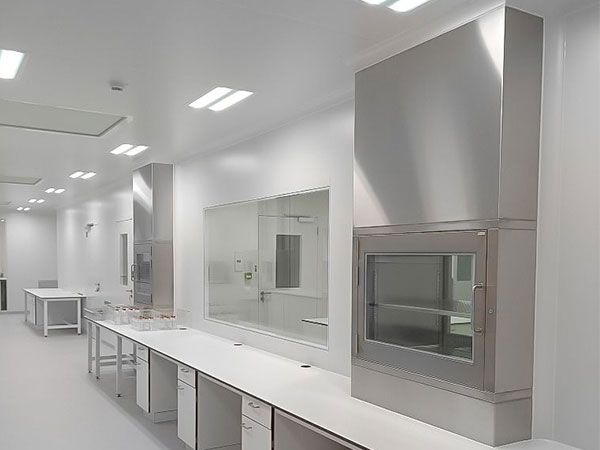
Cleanroom Auxiliary Systems: These include air showers for personnel entry, pass-through windows for material transfer, and clean benches, minimizing the introduction of contaminants through meticulous attention to detail.